Ctrl K
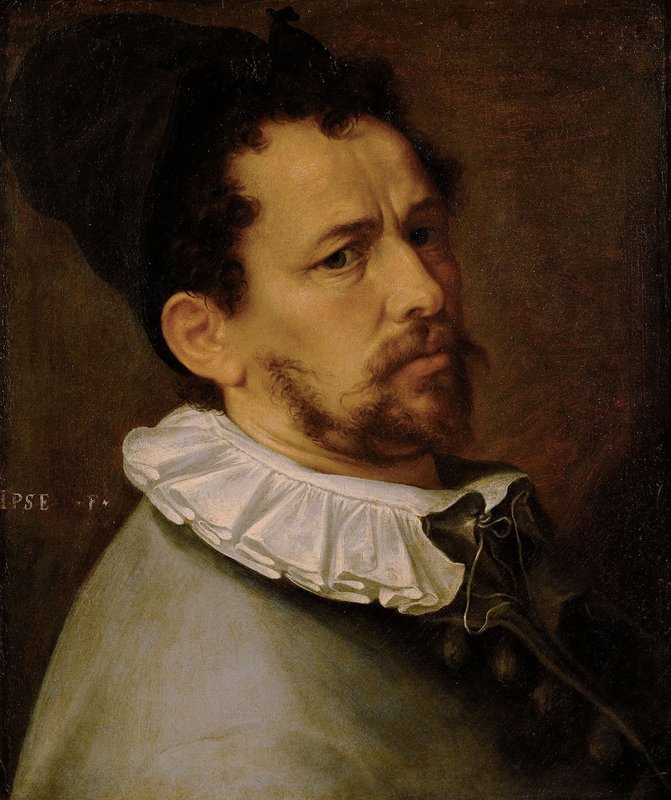
1546–1611
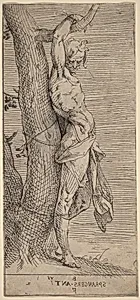
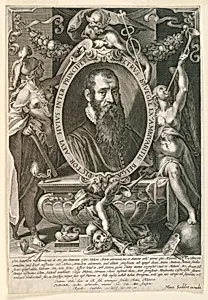
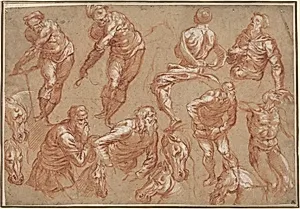
Bartholomaeus Spranger was born on 21 March 1546 in Antwerp, Habsburg Netherlands, as the third son of trader Ioachim Spranger and Anna Roelandtsinne. He began his artistic training in Antwerp, apprenticing for 18 months under landscape painter Jan Mandijn, briefly with Frans Mostaert after Mandijn's death, and then spending two years studying followed by two more in the workshop of Cornelis van Dalem. Spranger also copied prints by Frans Floris and Parmigianino, foreshadowing his Mannerist leanings. In 1565, at age 19, he journeyed to Paris, working six weeks in Marc Duval's studio, before heading to Italy. There, he spent eight months in Milan, three in Parma assisting Bernardino Gatti on the dome frescoes of Santa Maria della Steccata, and time in Rome as protégé of Giulio Clovio—alongside El Greco—and aiding Taddeo Zuccari.
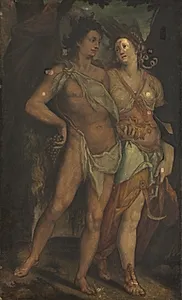
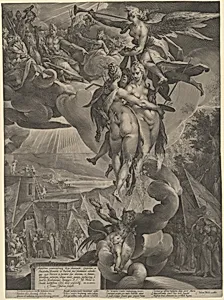
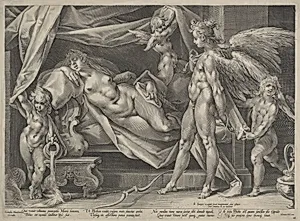
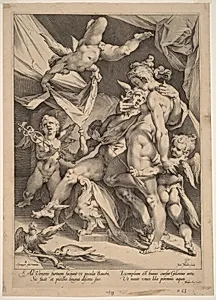
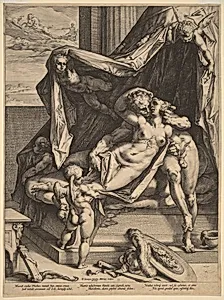
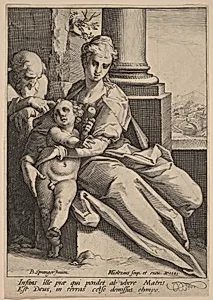
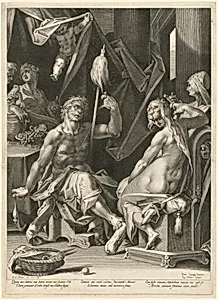
Spranger's international career peaked in imperial service. Appointed court painter by Pope Pius V in 1570, he was summoned to Vienna in 1576 by Emperor Maximilian II, and upon Maximilian's death, Rudolf II elevated him in 1581 to court painter and valet de chambre in Prague, a position he held until his death on 27 June 1611. There, he enjoyed Rudolf's intimate patronage—daily conversations, studio visits, a bestowed coat of arms in 1588, and hereditary nobility in 1595—producing mythological nudes and propaganda glorifying the emperor. Married in 1582 to Christina Müller, daughter of a Prague jeweler, Spranger endured tragedy with her death in 1600 after their children predeceased her. His style epitomized Northern Mannerism: sensuous, elongated figures in elegant, twisting poses, often featuring nude women viewed from behind, blending Netherlandish precision with Italian influences from Parmigianino, Correggio, and Roman Mannerists for a gleaming, brittle eroticism suited to courtly splendor.
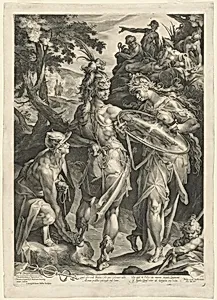
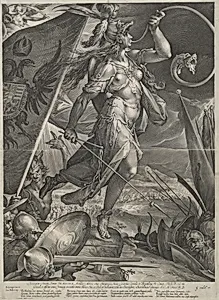
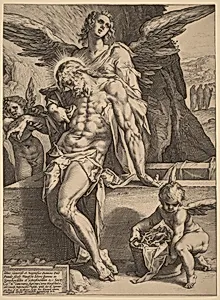
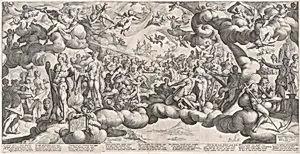
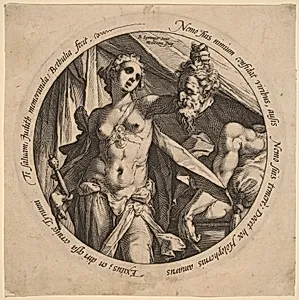
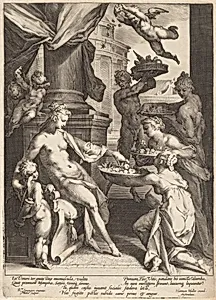
Among his major works are the dynamic drawing *Diana and Actaeon* (Metropolitan Museum of Art), the allegorical *Virtues of Rudolf II* (Kunsthistorisches Museum, Vienna) with Bellona atop a globe amid Venus and emblems of Habsburg domains, *Hercules, Deianira, and the Centaur Nessus*, *Venus in Vulcan's Forge*, *Minerva Victorious over Ignorance*, and *The Adoration of the Kings* (National Gallery, London). Spranger also sculpted, creating a terracotta *Body of Christ Supported by an Angel* (Courtauld Gallery) and bronze *Achelous and Deianeira* (Walters Art Museum), possibly influenced by Hans Mont. His legacy endures through engravings by collaborators Aegidius Sadeler II and Hendrik Goltzius, which disseminated his sensual Mannerism across Prague and the Dutch Republic, as chronicled in Karel van Mander's 1604 *Schilder-boeck*. As one of the first truly international artists, Spranger bridged Northern and Southern traditions, embodying the erotic elegance of Rudolfine Prague.