Ctrl K
1813–1879
**Charles Marville**, born Charles François Bossu on July 17, 1813, in Paris, adopted his professional pseudonym around 1832 to avoid the stigma of "bossu," meaning hunchback in French. Trained as a painter, engraver, and illustrator, he spent nearly two decades producing woodblock illustrations for books and magazines before embracing photography around 1850. His transition coincided with the medium's infancy; he began creating paper negatives and collaborated early on with pioneering publisher Louis-Désiré Blanquart-Evrard, who printed Marville's initial city views.
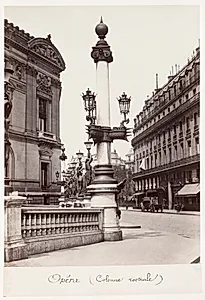
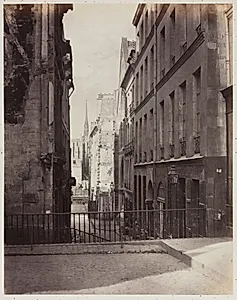
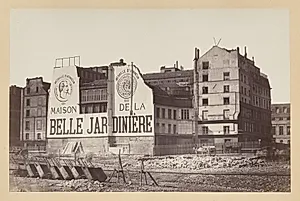
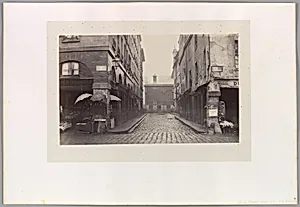
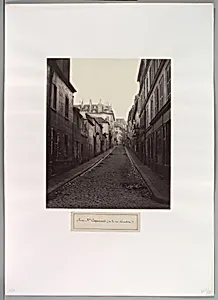
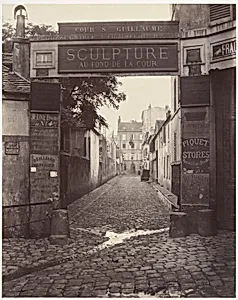
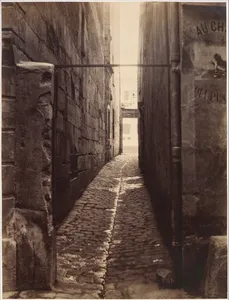
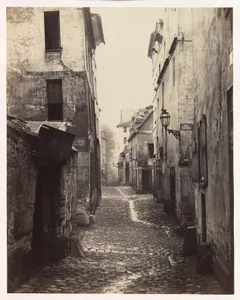
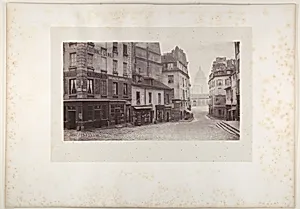
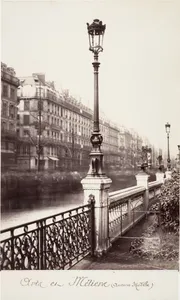
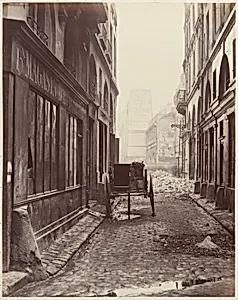
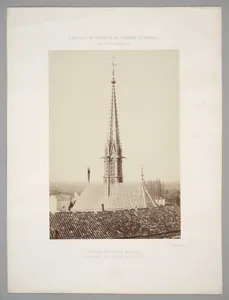
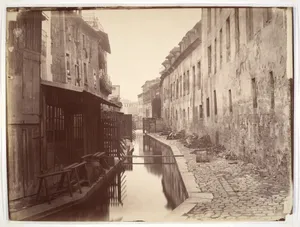
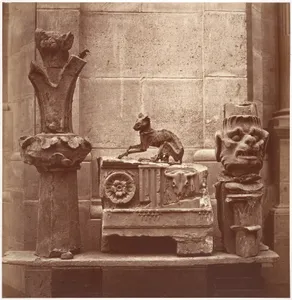
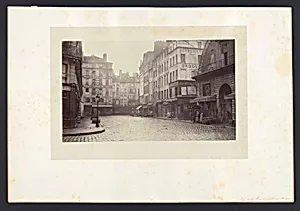
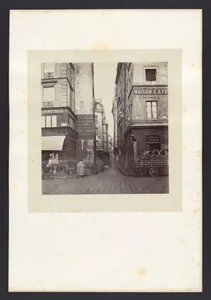
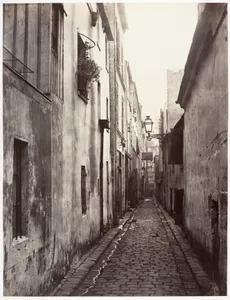
Marville's career ascended rapidly in the 1850s and 1860s amid Paris's dramatic transformation under Baron Georges-Eugène Haussmann. In 1858, Napoleon III commissioned him to document the newly landscaped Bois de Boulogne, marking his first major state project. By 1861, he served as official photographer to the Louvre, reproducing master drawings—including those of Jean-Auguste-Dominique Ingres, later destroyed in a fire—and Egyptian artifacts alongside Auguste Mariette. Appointed the City of Paris's official photographer in 1862, Marville meticulously recorded the medieval streets doomed for demolition, as well as the emerging wide boulevards, creating a comprehensive visual archive of urban renewal. He also captured innovative street furniture designed by architect Gabriel Davioud, from ornate lampposts to utilitarian urinals.
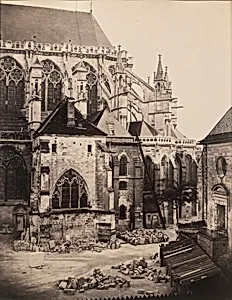
Renowned for his crystalline architectural and urban photography, Marville employed both paper and glass negatives to produce poetic yet precise images that eschewed pictorial sentimentality in favor of documentary clarity. Key works include *Rue de Constantine* (c. 1865), evoking the intimacy of old Paris alleys; his self-portrait (c. 1861); and expansive series like the 425-album compilation of vanishing neighborhoods for the Historic Works Department, alongside hundreds of ironwork studies. These prints, blending technical mastery with an eye for the sublime in the everyday, influenced perceptions of the modern city.
Marville's legacy endures as the preeminent chronicler of Haussmann's Paris, his images invaluable for historians and urban planners. Exhibited at the 1878 World's Fair, his oeuvre—preserved in city archives after his 1879 death—resurfaced in major retrospectives, affirming his pioneering role in architectural photography. With a longtime companion, engraver Jeanne-Louise Leuba, he left an enduring model for perceiving built environments that resonates today. (348 words)
![[Rue de Constantine]](https://images.artheonmuseum.org/met/ph/thumb/rue-de-constantine-264863.webp)
![[South Portal, Chartres Cathedral]](https://images.artheonmuseum.org/met/ph/thumb/south-portal-chartres-cathedral-283734.webp)
![["Industry" by Louis Petitot, Pont du Carrousel, Paris]](https://images.artheonmuseum.org/met/ph/thumb/industry-by-louis-petitot-pont-du-carrousel-paris-286340.webp)
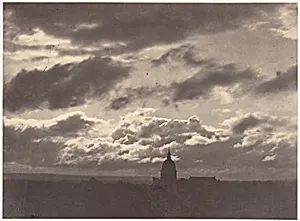
![[Cloud Study over Paris]](https://images.artheonmuseum.org/met/ph/thumb/cloud-study-over-paris-265131.webp)