Ctrl K
1748–1825
Movements
Occupations
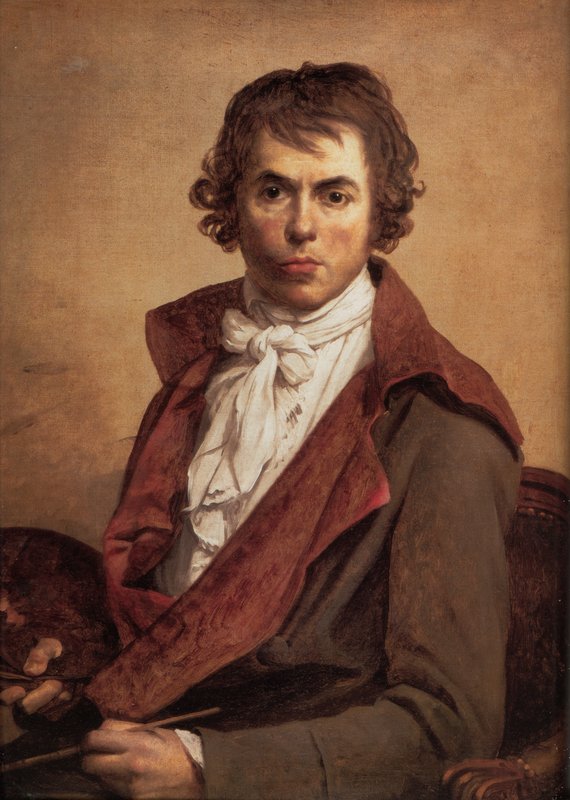
Jacques-Louis David, born on August 30, 1748, in Paris, emerged as the preeminent French painter of Neoclassicism, a movement emphasizing austere lines, moral clarity, and classical antiquity as antidotes to Rococo frivolity. Orphaned young after his father's death in a duel, he was raised by prosperous architect uncles and educated at the Collège des Quatre-Nations. Defying family expectations, David trained initially under his distant relative François Boucher before studying under Joseph-Marie Vien at the Royal Academy of Painting and Sculpture. After five failed attempts, he won the prestigious Prix de Rome in 1774 with *Erasistratus Discovering the Cause of Antiochus' Disease*, securing a formative stay in Italy where he absorbed the works of Poussin, Caravaggio, and Raphael Mengs, alongside Winckelmann's ideals of noble simplicity.
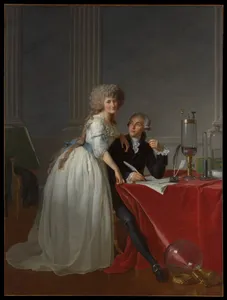
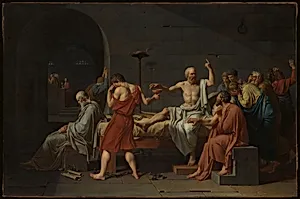
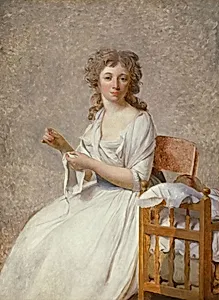
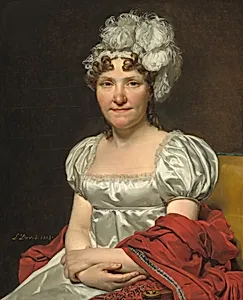
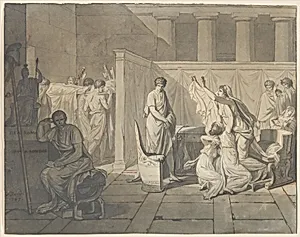
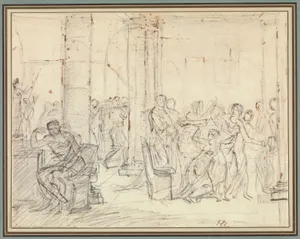
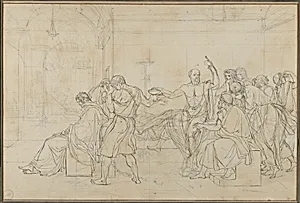
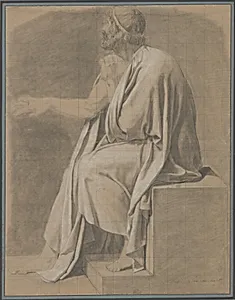
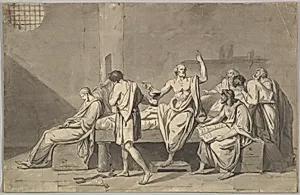
David's breakthrough came with monumental history paintings that fused Enlightenment virtue with republican zeal. *The Oath of the Horatii* (1784–1785) dramatized fraternal sacrifice in rigid, frieze-like composition, heralding Neoclassicism's ethical rigor at the Salon. Works like *The Death of Socrates* (1787), *Portrait of Antoine Laurent Lavoisier and His Wife* (1788), and *The Lictors Bring to Brutus the Bodies of His Sons* (1789) followed, showcasing firm contours and dramatic lighting. An ardent revolutionary, he joined the Jacobin Club, voted for Louis XVI's execution, and immortalized martyrs in *The Death of Marat* (1793), transforming propaganda into timeless tragedy.
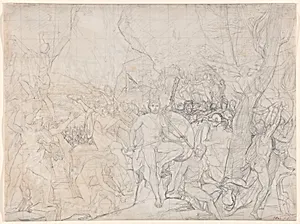
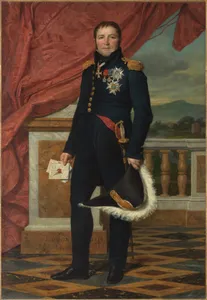
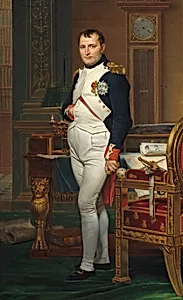
Aligning with Napoleon, David evolved toward an Empire style infused with Venetian warmth, producing *Napoleon Crossing the Alps* (1801) and the epic *Consecration of the Emperor Napoleon I and Coronation of the Empress Joséphine* (1805–1807). Later masterpieces included *Leonidas at Thermopylae* (1814). Exiled to Brussels in 1816 for his regicide after the Bourbon Restoration, he mentored artists like François-Joseph Navez amid smaller mythologies such as *Mars Being Disarmed by Venus* (1824). David's studio trained luminaries including Ingres and Gros, cementing his legacy as the architect of 19th-century academic painting and a bridge from classical revival to modern political art.
Wikidata/Wikimedia Commons