Ctrl K
1599–1660
Diego Rodríguez de Silva y Velázquez, baptized on June 6, 1599, in Seville, Spain, emerged as one of the supreme masters of the Spanish Baroque. The eldest son of notary Juan Rodríguez de Silva and Jerónima Velázquez, he displayed prodigious talent early on. At around age 11 or 12, he apprenticed under Francisco Pacheco, the esteemed Sevillian painter, theorist, and writer whose studio functioned like an academy, training Velázquez in drawing, proportion, perspective, and direct observation from life for six years beginning in 1610 or 1611. He may have briefly studied under Francisco Herrera the Elder beforehand. In 1618, Velázquez married Pacheco's daughter, Juana, with whom he had two daughters; the elder, Francisca, later wed court painter Juan Bautista Martínez del Mazo.
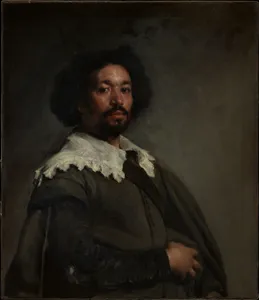
By 1623, Velázquez had captivated King Philip IV, becoming the court's principal painter—a position he held exclusively for nearly four decades, producing over 100 works, including the 27 in this collection. His early style drew from tenebrism, echoing Caravaggio's naturalism and chiaroscuro through copies and Sevillian sculpture, as in *Old Woman Frying Eggs* (1618) and *Waterseller of Seville* (c. 1620), innovative bodegones blending still life with subtle religious undertones. Evolving toward a freer, luminous manner influenced by Titian, Rubens (whom he met in 1628), and Venetian masters seen on Italian sojourns (1629–31 and 1649–51), he mastered loose brushwork, atmospheric depth, and psychological insight. Masterpieces like *The Surrender of Breda* (1634–35), with its empathetic diplomacy, and mythological scenes such as *The Triumph of Bacchus* (1628–29) showcase his shift to bold, economic strokes on light grounds.
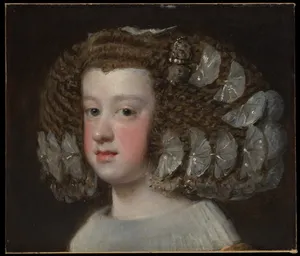
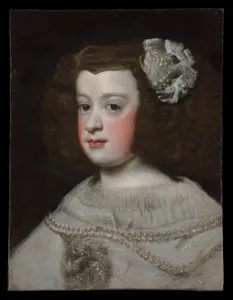
Velázquez's late masterpieces, including *The Rokeby Venus* (c. 1647–51)—Spain's first major female nude—and *Las Meninas* (1656), revolutionized representation with mirrored ambiguities, self-portraiture, and impressionistic light, capturing the Infanta Margaret Theresa amid court life. Knighted in 1659, he died on August 6, 1660, in Madrid. His legacy as the "painter's painter" profoundly shaped Édouard Manet, Pablo Picasso (who reinterpreted *Las Meninas* 58 times), Impressionists, and modern realists, prized for truthful observation and painterly bravura that bridged Baroque grandeur with proto-modern naturalism.