Ctrl K
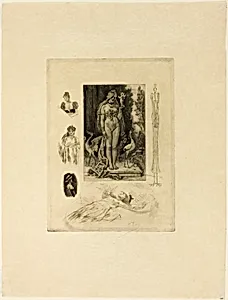
1833–1898
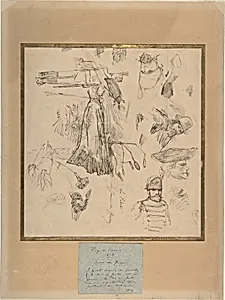
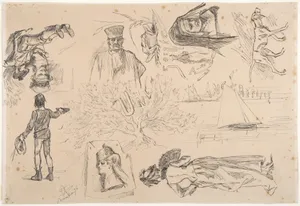
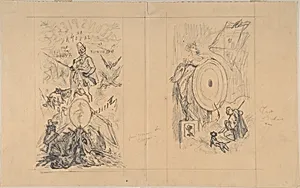
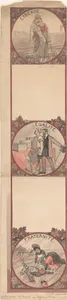
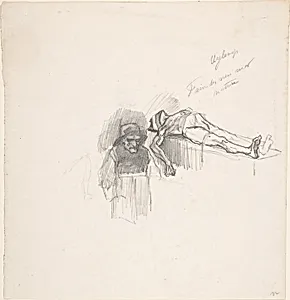
Félicien Rops, born Félicien Victor Joseph Rops on July 7, 1833, in Namur, Belgium, to a prosperous textile manufacturing family, displayed prodigious artistic talent from youth. The only child of Nicholas Rops and Sophie Maubile, he received private tutoring until age ten, followed by education at a Jesuit school in Namur (1843–1848), the Athénée Royal de Namur, and the Academy of Fine Arts there starting in 1849. Relocating to Brussels in 1851, he briefly studied law at the University of Brussels before dedicating himself to art at the Académie de Saint-Luc, where he honed drawing skills amid a bohemian circle including Louis Artan and Constantin Meunier. In 1856, he co-founded the satirical weekly *Uylenspiegel*, contributing over 180 lithographs that brought early fame as a caricaturist. By 1862, Rops traveled to Paris to study etching under Félix Bracquemond and Jules Ferdinand Jacquemart, mastering innovative techniques like soft-ground etching and later developing the "Ropsenfosse" method with Armand Rassenfosse.
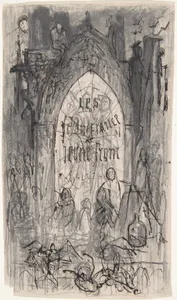
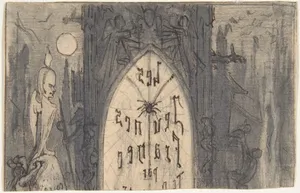
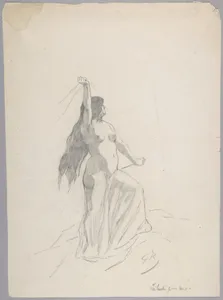
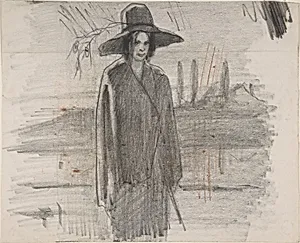
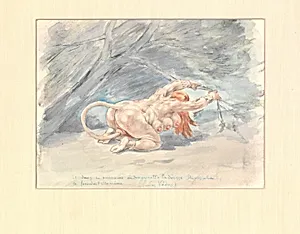
Rops's oeuvre spanned caricature, realism, and Symbolism, aligning him with Decadence and the Parisian fin de siècle. A founding member of the Société Libre des Beaux-Arts (1868) and Les XX (1883–1893), he championed progressive art through vivid intaglio prints, aquatints, and illustrations. Influenced by Honoré Daumier, Gustave Courbet, and Charles Baudelaire—whom he met in 1864 and illustrated for *Les Épaves* (1866)—Rops infused his work with eroticism, Satanism, social satire, and occult themes, often shocking contemporaries. Married to Charlotte Polet de Faveaux in 1857 (with whom he had son Paul and daughter Juliet, who died young), he estranged by 1875, settling in Paris with sisters Aurélie and Léontine Duluc, fathering daughter Claire with the latter. Major works include the provocative *Pornocrates* (1878), a Symbolist watercolor mocking lechery's triumph; *Les Sataniques* (1882), a series evoking biblical parables with demonic flair; and etchings for Barbey d'Aurevilly's *Les Diaboliques* (1880s), such as *Le Plus Bel Amour de Don Juan*. He pioneered Belgian comics with strips like *Les Époux Van-Blague* (1853).
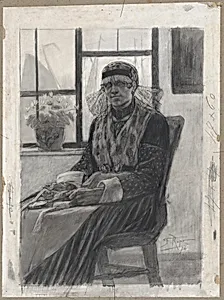
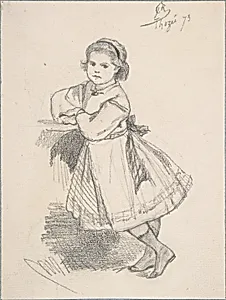
Rops's legacy endures as a virtuoso printmaker whose technical bravura and unflinching depictions of vice, death, and bourgeois hypocrisy influenced Symbolists like Edvard Munch. Lauded by Baudelaire as Belgium's finest artist, he produced thousands of works, including landscapes and genre scenes, before eyesight failed in 1892. Dying on August 23, 1898, in Essonnes, France, he was posthumously awarded the Legion of Honour (1899). The Musée Félicien Rops in Namur preserves over 3,000 engravings and 500 drawings, cementing his role in bridging 19th-century caricature with modernist provocation.