Ctrl K
1457–1504
Filippino Lippi was born around 1457 in Prato, the illegitimate son of the celebrated Florentine painter Fra Filippo Lippi and the nun Lucrezia Buti, who later received a papal dispensation to marry. The family moved to Spoleto, where young Filippino assisted in his father's workshop on the fresco cycle *Life of the Virgin* in the cathedral. Following Fra Filippo's death in 1469, when Filippino was about twelve, he completed his training under Sandro Botticelli, a former pupil of his father; guild records from 1472 list him as Botticelli's sole assistant, living in his master's house. The two collaborated closely on early panels, including cassone decorations now dispersed across museums like the Louvre.
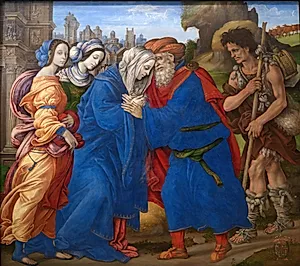
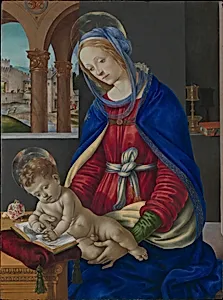
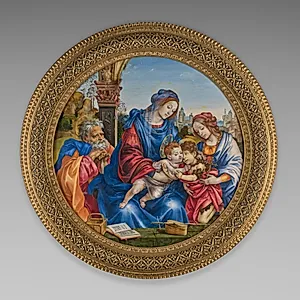
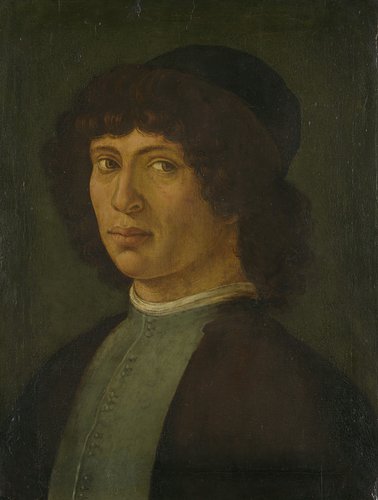
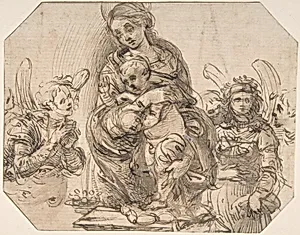
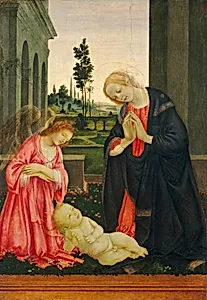
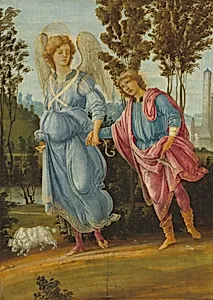
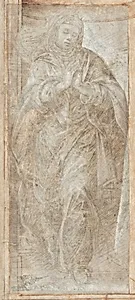
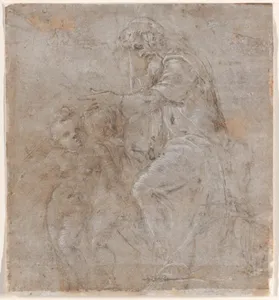
Filippino established his independent career around 1475 with devotional panels such as *Madonna and Child* (various versions, including those in Berlin, London, and Washington, D.C.) and *Tobias and the Angel* (c. 1475–1480, National Gallery of Art, Washington), blending Botticelli's grace with his own animated lines. He gained prominence completing Masaccio's Brancacci Chapel frescoes in Florence's Santa Maria del Carmine (c. 1483–1484), depicting *Stories of Saint Peter*, including his self-portrait. Other key commissions included the altarpiece *Vision of Saint Bernard* (1485–1487, Badia Fiorentina) and frescoes for the Strozzi Chapel in Santa Maria Novella (1487–1502), illustrating *Stories of Saints John the Evangelist and Philip*. In Rome from 1488 to 1493, he painted the Carafa Chapel frescoes in Santa Maria sopra Minerva, incorporating antique motifs. Notable panels feature *Portrait of a Woman with a Man at a Casement* (c. 1480s) and *Adoration of the Magi* (1496, Uffizi).
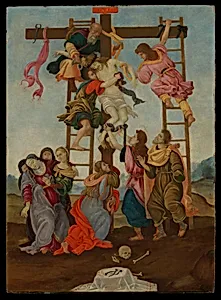
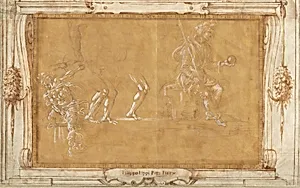
Working in the Florentine school tradition during the Italian Renaissance, Filippino's style evolved from Botticellian subtlety to a bolder, warmer colorism with vivid landscapes, grotesque details from Roman antiquities, and a fantastic, disquieting energy that anticipated Mannerism—ruthless executioners and animated pagan idols clashing with saints. His religious subjects dominated, though portraits and mythologies like *Sacrifice of Laocoön* (late 1490s) showcased classical revival. He left the unfinished *Deposition* (1504, Galleria dell'Accademia) at his death on April 18, 1504, in Florence, when all city workshops closed in tribute.
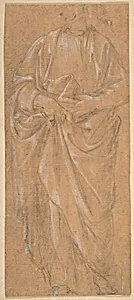
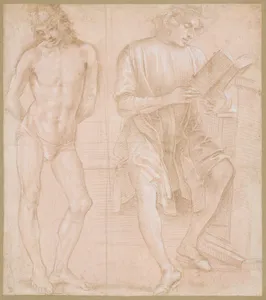
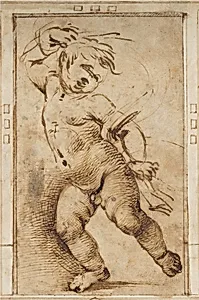
Filippino's legacy bridged Early and High Renaissance, influencing Tuscan Mannerists through complex compositions and sacra conversaziones; his follower Raffaellino del Garbo echoed his draftsmanship. Once hailed as ingenious by Vasari, his inventive fresco cycles in Florence and Rome remain pinnacles of quattrocento art.