Ctrl K
1825–1894
George Inness (1825–1894) was an American landscape painter regarded as one of the most important figures in nineteenth-century American art, bridging the Hudson River School tradition and a more personal, spiritually-inflected vision of nature. Born near Newburgh, New York, he received limited formal training, studying briefly with Régis François Gignoux, but was largely self-taught, developing his art through intensive study of Old Master landscapes, particularly the work of Claude Lorrain and the Barbizon School painters.
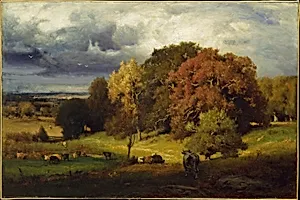
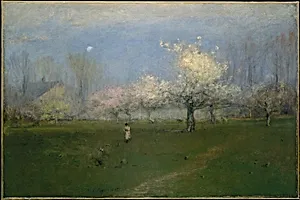
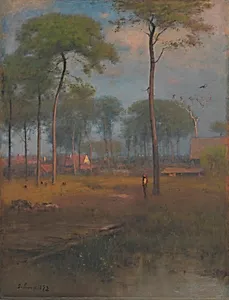
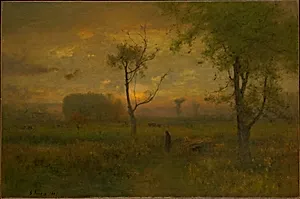
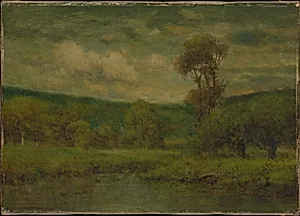
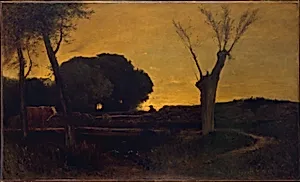
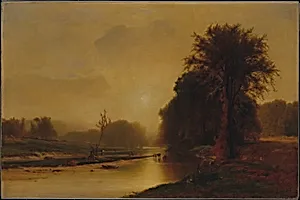
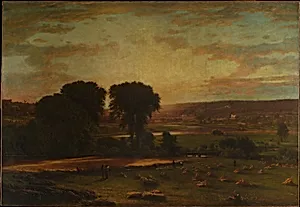
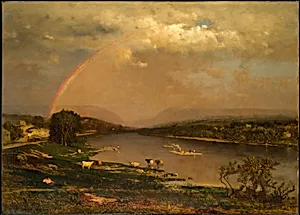
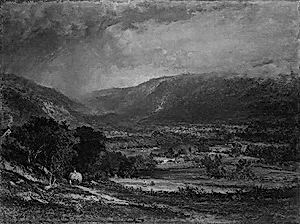
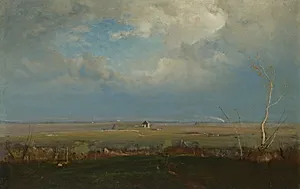
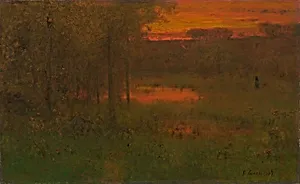
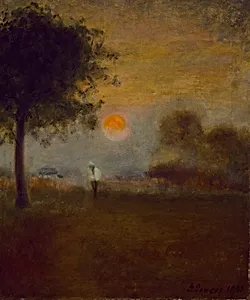
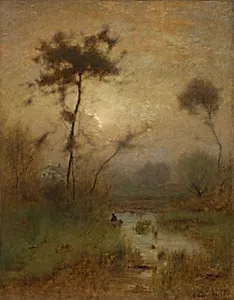
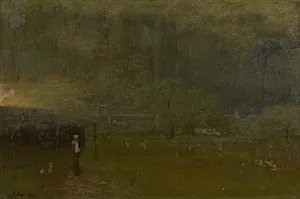
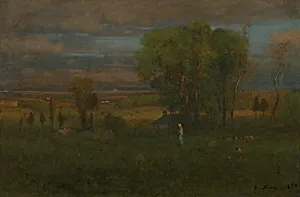
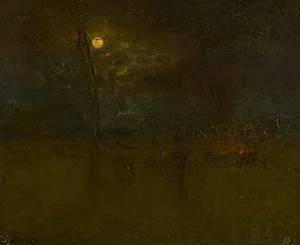
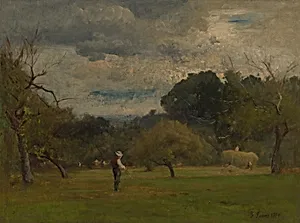
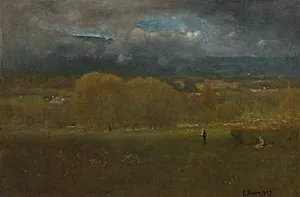
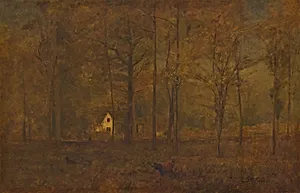
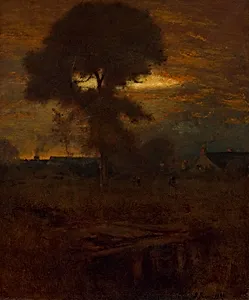
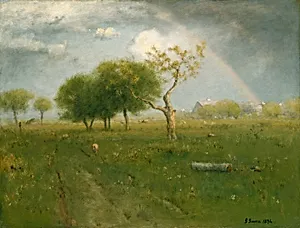
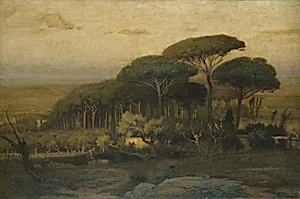
Inness's early paintings follow the detailed, panoramic conventions of the Hudson River School, but by the 1860s — influenced by trips to France and Italy and by the Barbizon painters Théodore Rousseau and Corot — he moved toward a more atmospheric, tonal approach. His mature landscapes dissolve precise detail into soft, luminous fields of color, capturing the mood and spiritual essence of a scene rather than its topographic particulars.
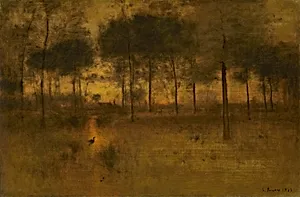
His later paintings, such as "The Home of the Heron" (1893) and "Early Autumn, Montclair" (1891), are among the most atmospheric works in American art — suffused with a golden, almost mystical light that reflects his deeply held Swedenborgian spiritual beliefs. Inness believed that landscape painting should express the inner spiritual reality of nature, not merely its outward appearance.
Inness was enormously influential in moving American landscape painting from detailed naturalism toward a more subjective, painterly approach. He was elected to the National Academy of Design and received major prizes at international expositions. His paintings are held by the Metropolitan Museum of Art, the National Gallery of Art, the Art Institute of Chicago, the Brooklyn Museum, and the Montclair Art Museum in New Jersey, near his longtime home.