Ctrl K
1855
Henry Waldeck was an American artist active around 1935, best known for his precise watercolor renderings created as part of the Index of American Design, a Federal Art Project under the Works Progress Administration (WPA). This ambitious initiative, spanning 1935 to 1942, commissioned artists across the United States to document everyday objects of American folk art and craftsmanship, preserving their form and cultural significance through detailed illustrations. Waldeck's contributions, produced circa 1938, exemplify the project's goal of celebrating utilitarian designs rooted in colonial and pioneer life.
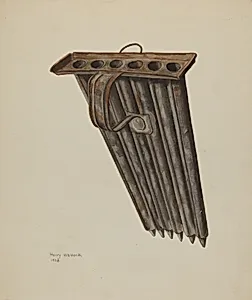
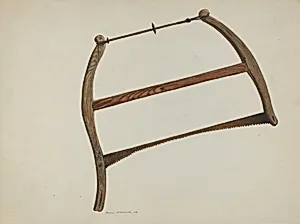
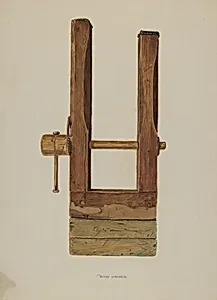
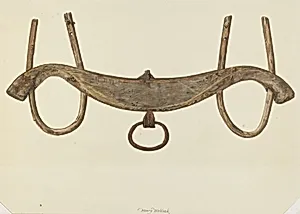
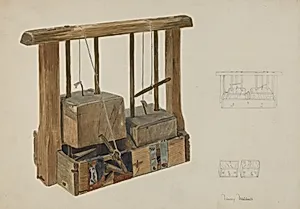
Little is known of Waldeck's early life or formal training, as biographical details remain scarce. His works suggest a meticulous eye for technical accuracy and a sensitivity to texture and function, rendered primarily in watercolor, graphite, pen and ink, and colored pencil on paperboard. Among his major pieces in the National Gallery of Art's collection are *Rat Trap* (c. 1938), a clever depiction of a wooden vermin catcher; *Bucksaw* (1938), capturing the rugged simplicity of a logging tool; *Oxen Yoke* (c. 1938), illustrating the sturdy wooden harness for draft animals; *Candle Mold* (1938), showing a household implement for tallow candles; and *Pegging Jack* (c. 1938), a shoemaker's lasting tool. These objects, drawn from everyday American material culture, highlight Waldeck's role in elevating the ordinary to art.
Waldeck's legacy endures through these five surviving renderings, which now form a cornerstone of the Index of American Design holdings at the National Gallery of Art. By faithfully reproducing antique tools and household items—many now lost to time—his illustrations serve as vital historical records, bridging art and ethnography. They invite modern viewers to appreciate the ingenuity of pre-industrial American craftsmanship, underscoring the WPA's broader impact on cultural preservation during the Great Depression era. Though Waldeck himself fades into obscurity, his precise draftsman's touch ensures that the humble artifacts of America's past remain vividly alive.
All 5 artworks loaded