
Rat Trap
c. 1938
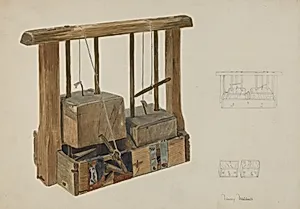
Medium
watercolor and graphite on paperboard
Dimensions
overall: 24.8 x 35.8 cm (9 3/4 x 14 1/8 in.) Original IAD Object: 10" high; 5" deep; 9 1.4" wide
Classification
Index of American Design
Department
CG-W
Museum
National Gallery of Art, Washington, D.C.
Credit
Index of American Design
Accession Number
1943.8.13384
Rights
Public Domain
Art Historical Context
**Rat Trap**, a captivating watercolor and graphite rendering by artist Henry Waldeck around 1938, meticulously documents a clever American folk object measuring about 10 inches high, 5 deep, and 9¼ inches wide. Created on paperboard (24.8 x 35.8 cm overall), this work showcases the trap's ingenious mechanical design—likely a spring-loaded wooden contraption reflecting everyday Yankee ingenuity from the 19th or early 20th century. Waldeck's precise lines and subtle watercolor washes bring out the object's textures, from rough-hewn wood grains to metallic springs, inviting viewers to appreciate the artistry in utilitarian crafts. This piece is part of the *Index of American Design* (IAD), a groundbreaking WPA Federal Art Project from 1935–1942 that employed artists during the Great Depression to celebrate U.S. cultural heritage. Over 18,000 such renderings preserved folk art, tools, and designs at risk of being lost, now housed in the National Gallery of Art's collection (Department CG-W). Waldeck's contribution highlights how ordinary items like rat traps embodied American resourcefulness and self-reliance. Through its blend of technical accuracy and aesthetic sensitivity, *Rat Trap* reminds us of the beauty in functional design, bridging art history with everyday life and underscoring the IAD's role in fostering national pride amid economic hardship. (198 words)
About the Artist
Henry Waldeck · 1855–present
Henry Waldeck was an American artist active around 1935, best known for his precise watercolor renderings created as part of the Index of American Design, a Federal Art Project under the Works Progress Administration (WPA). This ambitious initiative, spanning 1935 to 1942, commissioned artists across the United States to document everyday objects of American folk art and craftsmanship, preserving ...