Ctrl K
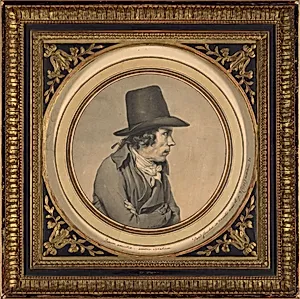
1748–1825
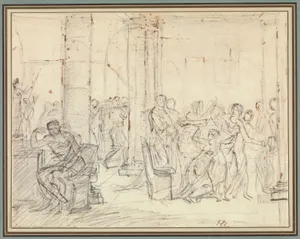
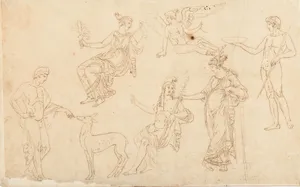
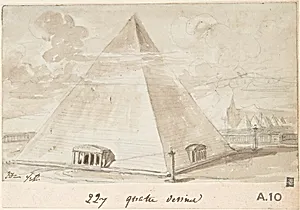
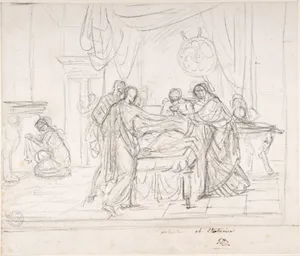
Jacques-Louis David (1748–1825), born in Paris on August 30 to a prosperous family, faced early tragedy when his father was killed in a duel around age nine. Raised by his mother's two architect uncles after his mother departed, David overcame family resistance to architecture and a facial tumor that hindered his speech and studies at the Collège des Quatre-Nations. He began training under the Rococo master François Boucher, a distant relative, who redirected him to Joseph-Marie Vien at the Royal Academy of Painting and Sculpture due to shifting tastes toward classicism. After multiple attempts, David won the prestigious Prix de Rome in 1774 with *Erasistratus Discovering the Cause of Antiochus' Disease*, enabling five formative years in Italy (1775–1780) alongside Vien. There, he immersed himself in the works of Poussin, Caravaggio, and Raphael, absorbed Johann Joachim Winckelmann's Neoclassical theories, and sketched ancient ruins like Pompeii, forging his rigorous, line-driven style.
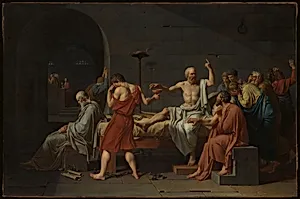
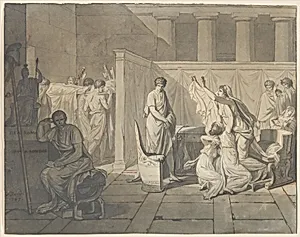
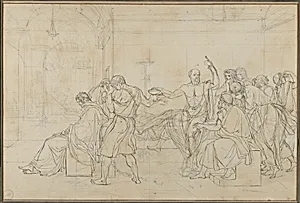
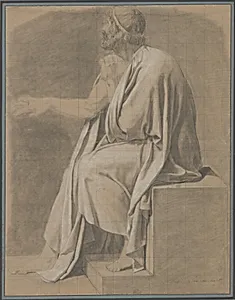
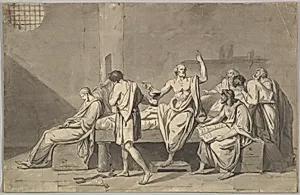
David emerged as the era's leading Neoclassical artist, rejecting Rococo frivolity for austere compositions evoking ancient virtue, stoic heroism, and Enlightenment ideals of civic duty. His breakthrough, *Oath of the Horatii* (1784, Louvre), depicted Roman brothers swearing patriotic fealty, its frieze-like forms and stark lighting symbolizing masculine sacrifice over feminine emotion. Works like *The Death of Socrates* (1787, Metropolitan Museum of Art) and *The Lictors Bring to Brutus the Bodies of His Sons* (1789, Louvre) reinforced republican themes. A fervent Jacobin during the French Revolution, friend to Robespierre, and National Convention member who voted to execute Louis XVI, David immortalized martyrs in *The Death of Marat* (1793, Royal Museums of Fine Arts of Belgium), transforming a grisly assassination into a Pietà-like icon of revolutionary purity.
As Napoleon's official painter from 1804, David glorified the emperor in equestrian propaganda like *Napoleon Crossing the Alps* (1801, Château de Malmaison) and the monumental *The Coronation of Napoleon* (1805–1807, Louvre). Exiled to Brussels after Waterloo, he produced luminous late works such as *Mars Being Disarmed by Venus and the Three Graces* (1824, Brussels) before dying from a carriage accident. Married to Marguerite Charlotte Pécoul (with four children), David's studio trained luminaries like Jean-Auguste-Dominique Ingres and Antoine-Jean Gros, cementing Neoclassicism's dominance in French art and influencing fashions, politics, and generations of painters who channeled his moral clarity into modern expression.