Ctrl K
1789–1869
**Johann Friedrich Overbeck** (3 July 1789 – 12 November 1869) was a German painter and a founder of the Nazarene movement. Born in Lübeck into a prominent Protestant family—his father, Christian Adolph Overbeck, was a doctor of law, poet, mystic pietist, and burgomaster—he received early classical and artistic instruction at the local Gymnasium under his uncle.
Overbeck left Lübeck in 1806 to study at the Vienna Academy under Heinrich Füger. Dissatisfied with the neoclassical emphasis on technique over spiritual depth, he co-founded the Lukasbund (Brotherhood of St. Luke) in 1809 with like-minded students, including Franz Pforr. The group sought to revive medieval guild traditions and renew art through Christian faith and inspiration from early Italian Renaissance masters such as Perugino and the young Raphael. Expelled from the academy for their views, Overbeck and several companions moved to Rome in 1810, settling in the abandoned monastery of Sant’Isidoro. There they became known as the Nazarenes. Overbeck converted to Roman Catholicism in 1813, which he saw as a baptism for his art.
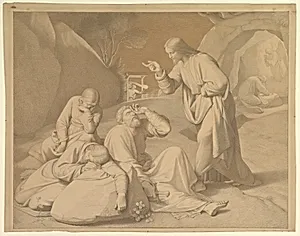
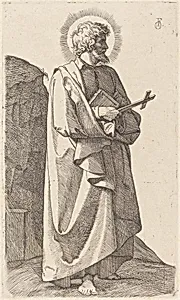
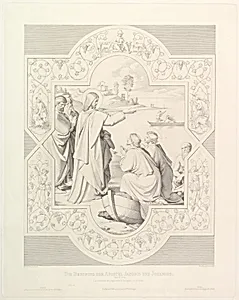
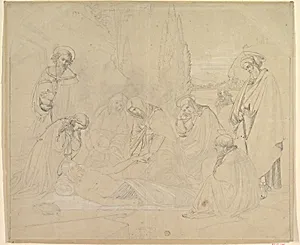
The Nazarenes worked communally on frescoes, including episodes from the story of Joseph at the Casa Bartholdy (completed 1818) and scenes from Tasso, Dante, and Ariosto at the Villa Massimo. Overbeck’s major individual work is the large fresco *The Rose Miracle of St. Francis* (1829) in the Portiuncula Chapel at Assisi. Other notable paintings include *Portrait of the Painter Franz Pforr* (1810), *Christ’s Entry into Jerusalem* (1824), *Italy and Germany* (1828), and *The Triumph of Religion in the Arts* (1840). His precise outlines, clear colors, and emphasis on religious symbolism defined the Nazarene style.
Overbeck spent the rest of his life in Rome, receiving commissions from popes and princes while his later works grew more pallid. He died in Rome in 1869 and is buried in San Bernardo alle Terme. His leadership of the Nazarenes profoundly shaped 19th-century Christian devotional art and influenced the Pre-Raphaelite Brotherhood in Britain. Today he is recognized as a pivotal figure in Romanticism’s turn toward medieval and early Renaissance ideals.