Ctrl K
1803–1848
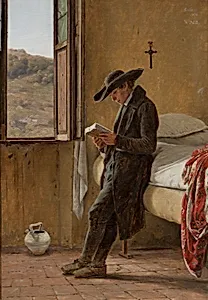
**Martinus Christian Wesseltoft Rørbye (1803–1848) was a Danish painter celebrated for his genre scenes, landscapes, and architectural views, emerging as a central figure in the Danish Golden Age of painting.** Born on 17 May 1803 in Drammen, Norway, to Danish parents, he moved early to Copenhagen and began studies at the Royal Danish Academy of Fine Arts in 1820. There he trained under Christian August Lorentzen and, most significantly, Christoffer Wilhelm Eckersberg, whose emphasis on precise observation of nature profoundly shaped Rørbye’s realistic approach; he became one of Eckersberg’s favorite students.
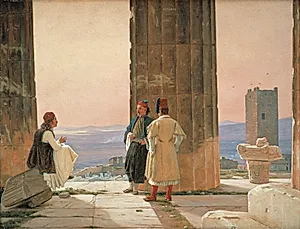
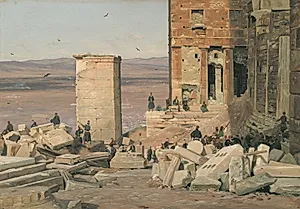
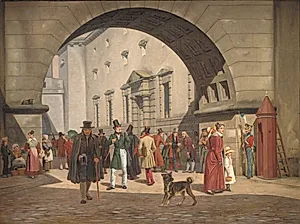
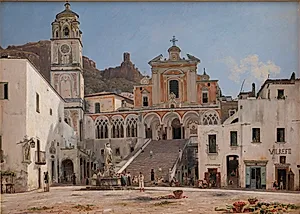
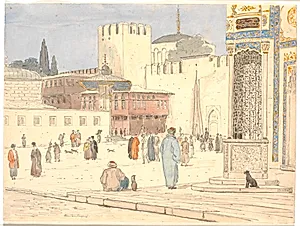
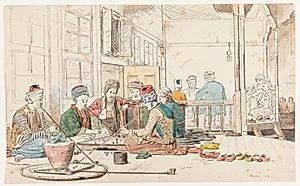
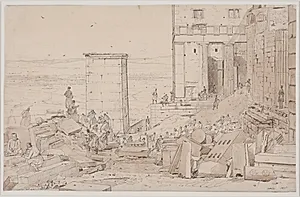
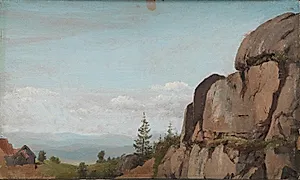
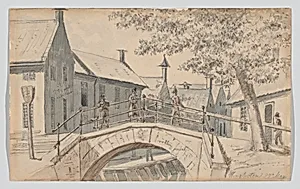
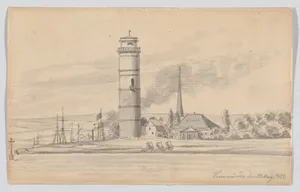
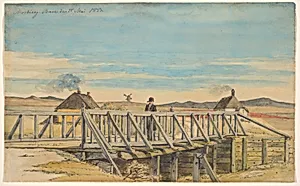
Rørbye’s style blended meticulous detail with rich color, reflecting both Eckersberg’s influence and Lorentzen’s chromatic sensibility. He worked firmly within the Danish Golden Age tradition, producing intimate views of Copenhagen life alongside exotic scenes drawn from extensive travels. The most peripatetic artist of his generation, he journeyed to Norway and Sweden, then south through the Netherlands and France to Italy, Greece, and Constantinople—destinations that yielded striking orientalist studies and folk-life compositions. He was also the first Danish painter to depict Skagen, visiting in 1833 and again near the end of his life, nearly half a century before the celebrated Skagen Painters colony formed.
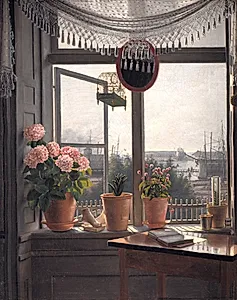
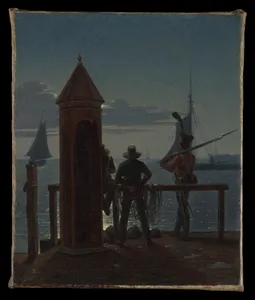
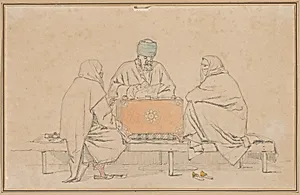
Among his notable works are the evocative *View from the Artist’s Window* (c. 1825), the atmospheric *View from the Citadel Ramparts in Copenhagen by Moonlight* (1839), the prize-winning *A Turkish notary witnesses a marriage contract* (1838), and one of his final paintings, *Men of Skagen on a summer evening in fair weather* (1848). He exhibited regularly at Charlottenborg, received the Exhibition Medal in 1838, and in 1844 was appointed professor at the Academy’s school of modelling, where he also gave private lessons to Christen Dalsgaard.
Rørbye married Rose Frederikke Schiøtt in 1839; his health declined in later years, and he died in Copenhagen on 29 August 1848 at age 45. His legacy endures through his pioneering travels and sensitive portrayals of both everyday Danish scenes and distant cultures, with works held in major collections including the Danish National Gallery, the Ny Carlsberg Glyptotek, and the Hirschsprung Collection.