Ctrl K
1872–1944
**Piet Mondrian** (born Pieter Cornelis Mondriaan, 7 March 1872 – 1 February 1944) was a Dutch painter and theoretician who became one of the most influential figures in 20th-century abstract art. Born in Amersfoort, Netherlands, as the second of his parents’ children, he grew up in a creative household; his father was a qualified drawing teacher and headmaster, while his uncle, Frits Mondriaan, a pupil of Willem Maris, belonged to the Hague School of landscape painters and provided early guidance in drawing and painting along the river Gein.
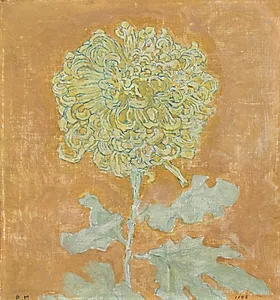
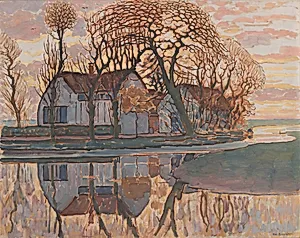
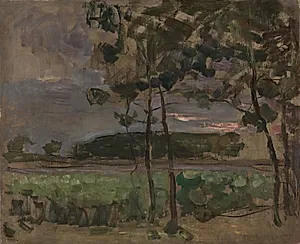
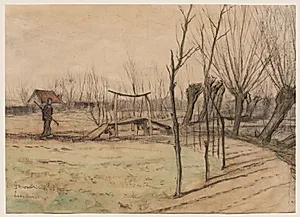
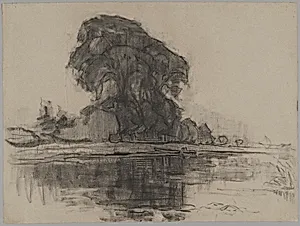
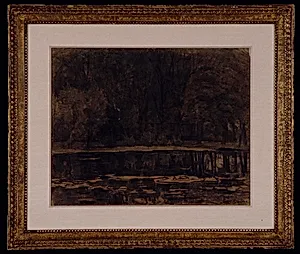
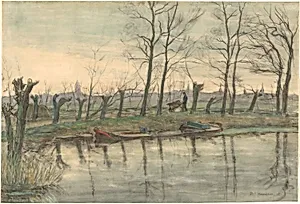
Mondrian received formal training at the Rijksakademie (Academy of Fine Arts) in Amsterdam, where he studied from 1892 onward after qualifying as a teacher. His early work followed the naturalistic and Impressionistic traditions of the Hague School, featuring landscapes of windmills, fields, and rivers. Over time he explored pointillism, Fauvism, and Symbolist elements, joining the Theosophical Society in 1909, which deepened his interest in spiritual and universal themes.
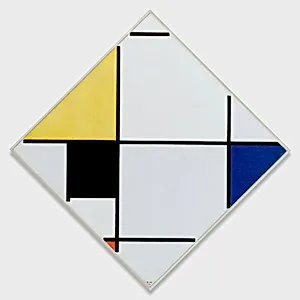
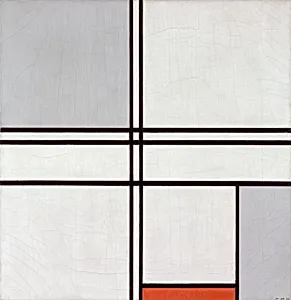
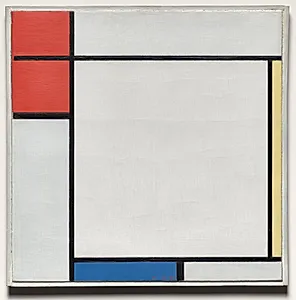
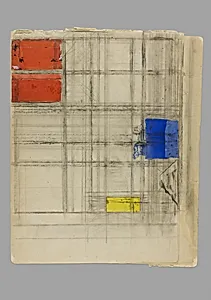
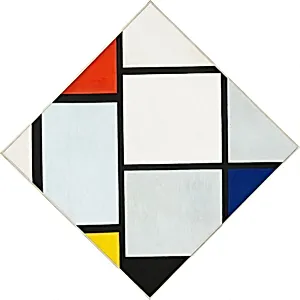
His artistic evolution accelerated after moving to Paris in 1912 (where he simplified his name), encountering Cubism, and later co-founding the De Stijl movement with Theo van Doesburg during World War I. He developed Neoplasticism, restricting his vocabulary to horizontal and vertical lines, primary colors (red, blue, yellow), and black, white, and gray to express “universal beauty” beyond representation. Iconic works include *Evening; Red Tree* (1908–1910), *Gray Tree* (1911), *Composition with Red Blue and Yellow*, *Broadway Boogie Woogie*, and the unfinished *Victory Boogie Woogie*.
Mondrian spent his later years in Paris and then New York, refining his geometric style until his death in 1944. His rigorous pursuit of abstraction profoundly shaped modern art, design, and architecture, establishing him as a pioneer whose emphasis on harmony, rhythm, and spiritual purity continues to resonate.