Ctrl K
1595–1661
**Pieter de Molijn** (1595–1661) was a Dutch Golden Age landscape painter of English birth and Flemish descent, baptized on 6 April 1595 in London at the Dutch Reformed Austin Friars church to parents from Ghent and Brussels. His family likely emigrated to England for economic opportunities, but young Pieter returned to the Netherlands, settling in Haarlem where he joined the Guild of St. Luke in 1616 and later served as dean multiple times (1630, 1633, 1637, 1638, 1645, 1649). He briefly lived in Delft (1616–1627), visited Rome in 1618, and married twice, fathering sons including painters Anthony Molijn (1635–1702), his pupil, and Pieter (1637–1701), known as "Tempeest." Little is known of his early training; no teachers are documented, though he may have been influenced by Haarlem contemporaries like Esaias van de Velde, and his style reflects Flemish mannerist traditions from artists such as Roelandt Savery.
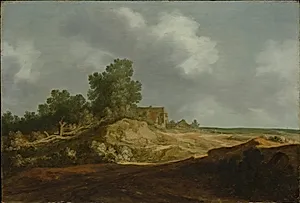
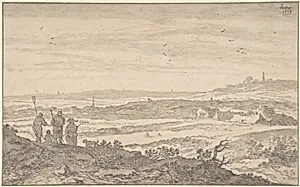
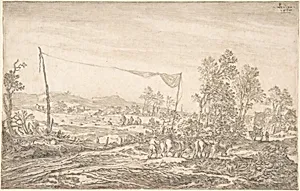
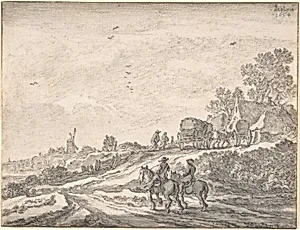
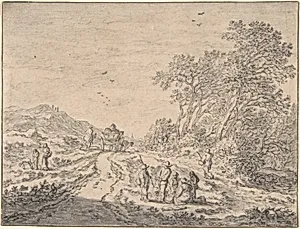
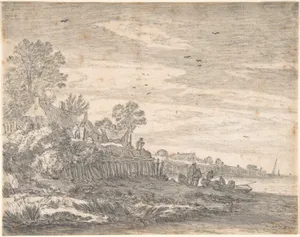
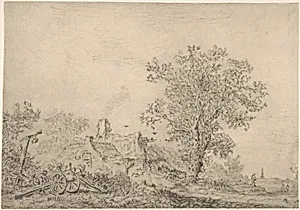
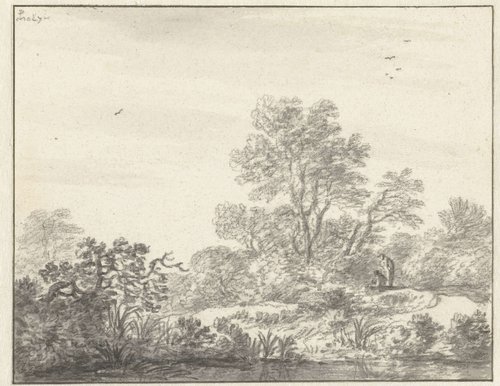
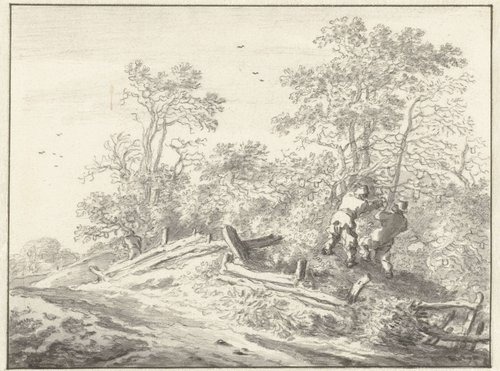
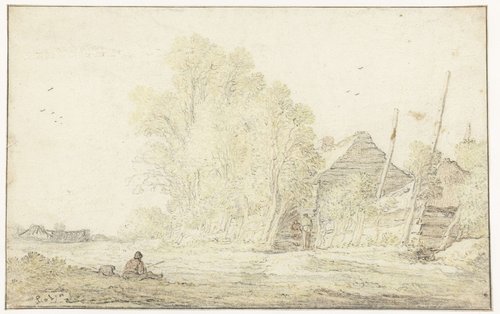
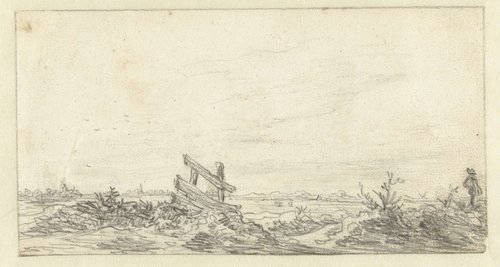
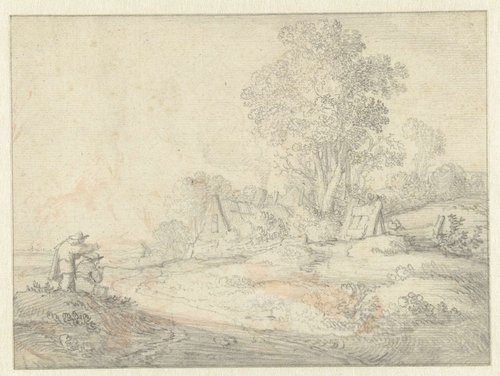
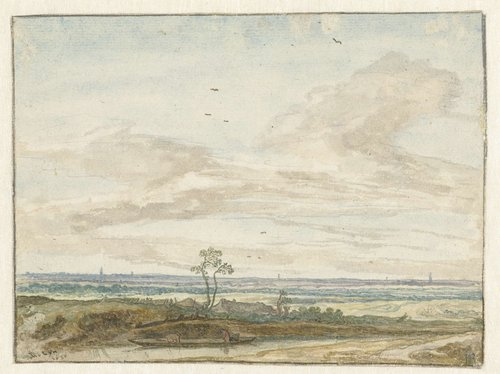
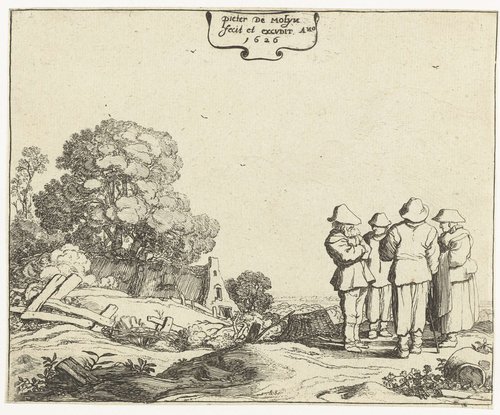
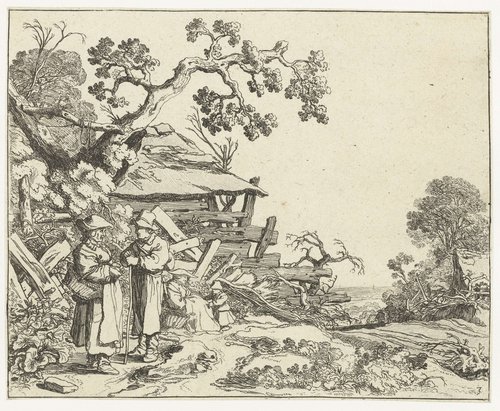
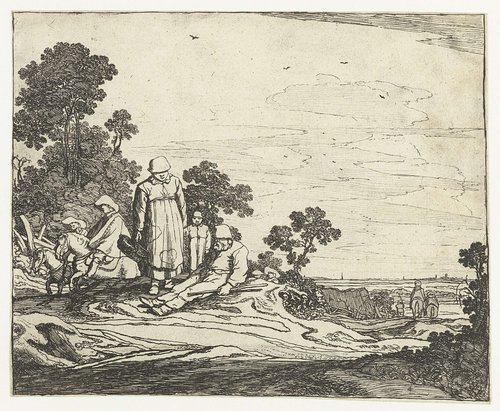
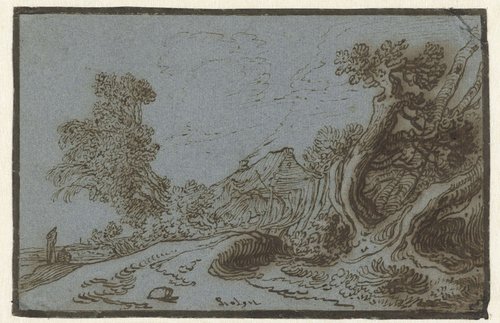
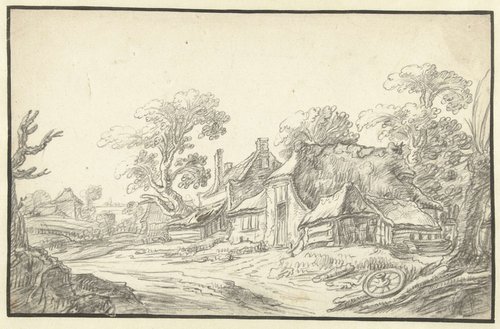
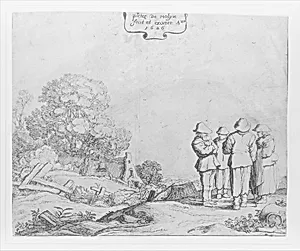
De Molijn worked in the Haarlem landscape tradition, pioneering the tonal phase of naturalistic Dutch painting around 1625 with small-scale views unified by sweeping diagonals, broad brushwork, and restricted palettes of grays, greens, browns, and subtle blues—anticipating masters like Jan van Goyen and Salomon van Ruysdael. A versatile "jack-of-all-trades," he produced landscapes, genre scenes, marines, and etchings, innovating the art market by creating affordable monochrome dune and river motifs for broader audiences via auctions and lotteries, while crafting richer, colored pieces for elites. His output was prolific, blending Flemish decorative elements with emerging realism, as seen in *Landscape with Dunes and a Sandy Road* (1626, Herzog Anton Ulrich-Museum, Braunschweig) and *Landscape with a Cottage* (1629, Metropolitan Museum of Art).
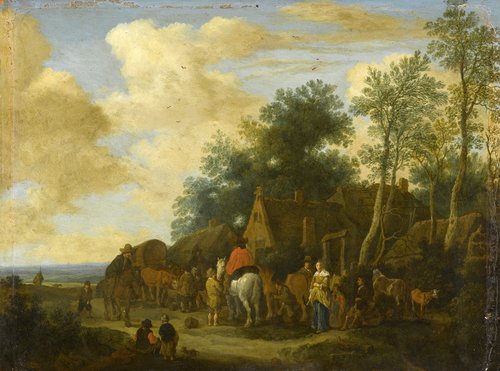
Among his notable works are *Peasants Returning Home* (1647, Frans Hals Museum, Haarlem), evoking post-labor tranquility; *Landscape with Conversing Peasants* (ca. 1640, Szépművészeti Múzeum, Budapest); and *Travellers along the Crest of a Hill* (1652, National Gallery of Art). De Molijn taught pupils including Gerard ter Borch the Younger, Allart van Everdingen, Jan Coelenbier, and Christian de Hulst, extending his influence. Highly regarded in his lifetime for glowing foregrounds and atmospheric distances, he bridged mannerism and tonality, shaping the Dutch landscape genre before fading from prominence after his death on 23 March 1661 in Haarlem—yet revived today as a foundational figure.