Ctrl K
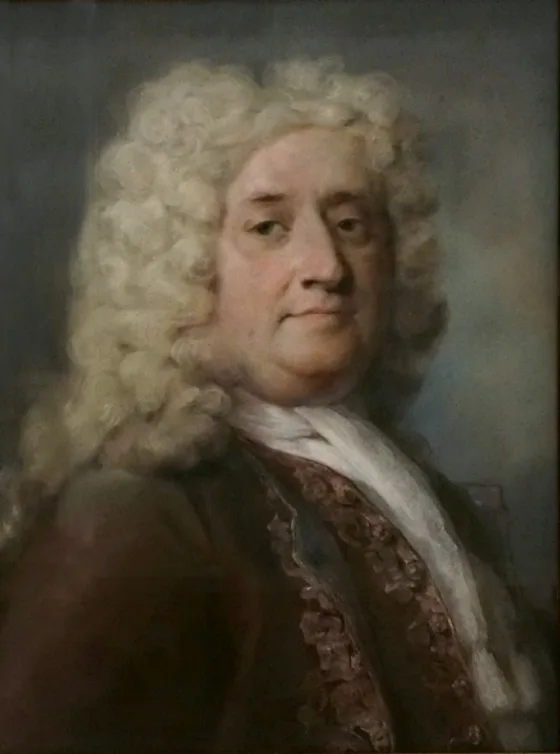
1659–1734
Sebastiano Ricci (1659–1734) was born in Belluno, in the Venetian Republic, and received his early training in Venice, where he was apprenticed at age twelve to the Milanese painter Federico Cervelli. Some accounts identify Sebastiano Mazzoni as his first master. A youthful scandal involving an unintended pregnancy and a charge of attempted poisoning led to imprisonment in 1678, from which he was released through noble intervention; he married the woman in 1691. Fleeing to Bologna around 1681, Ricci absorbed influences from Giovanni Gioseffo dal Sole, securing early commissions like the *Decapitation of John the Baptist* (1682) for the Fraternity of Saint John in Florence.
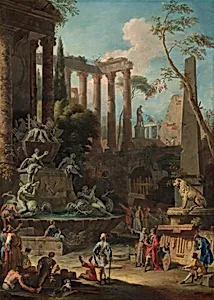
Ricci's peripatetic career took him across Europe, marking him as one of the first traveling Venetian painters of his era. He worked in Parma under the Farnese dukes, copying Raphael's *Coronation of Charlemagne* (1692–1694) for Louis XIV; frescoed in Milan (San Bernardino dei Morti, 1695), Vienna's Schönbrunn Palace (1702), Florence's Pitti Palace and Palazzo Fenzi (1706–1707), and London (1712–1716), where he painted mythological overdoors like *Cupid and Jove* and *Bacchus and Ariadne* for Burlington House, and frescoes at Chelsea Hospital. He collaborated frequently with his nephew and pupil Marco Ricci, including on London landscapes and the Paris submission *Triumph of Wisdom over Ignorance* (1718). Later commissions included the apostles series for Venice's St. Stae (1722, with Tiepolo and Piazzetta) and works for the Savoy in Turin (1724–1729).
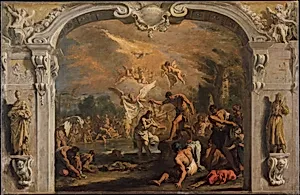
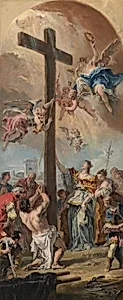
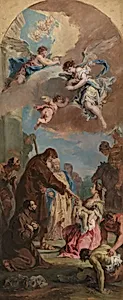
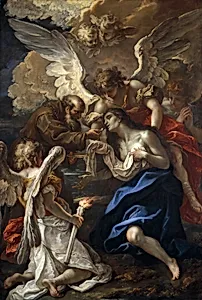
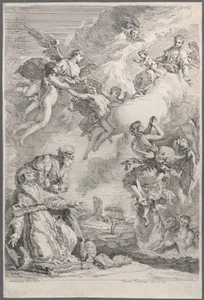
Working in the late Baroque Venetian tradition, Ricci synthesized Veronese's chromatic splendor, Cortona's grandeur, and Magnasco's intensity into luminous, vigorous frescoes and canvases that bridged to Rococo. Key works include *The Last Communion of Saint Mary of Egypt* (c. 1695), *The Baptism of Christ* (c. 1713–1714), *A Miracle of Saint Francis of Paola* (1733), and *The Exaltation of the True Cross* (1733). His airy, brilliant heavenly scenes in Florentine palaces anticipated Tiepolo's innovations, while his international success revived Venetian painting's prestige, influencing followers like Francesco Fontebasso and Giovanni Domenico Ferretti.
Ricci's legacy endures as a pivotal figure who exported Venice's decorative verve, inaugurating Rococo interiors and paving the way for the 18th-century Venetian renaissance. Admitted to Venice's Clementine Academy in 1727, he died wealthy in Venice, leaving a corpus that blended dramatic narrative with radiant color.

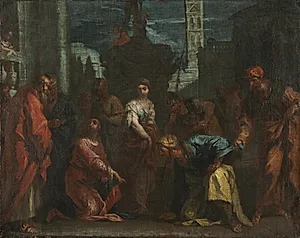
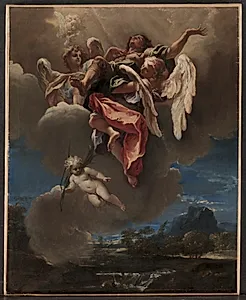
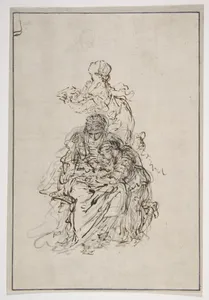
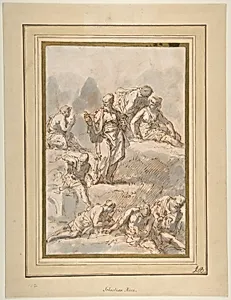
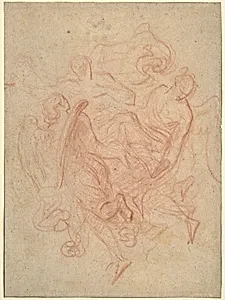
![The Ecstasy of Saint Francis [recto]](https://images.artheonmuseum.org/nga/thumb/the-ecstasy-of-saint-francis-recto-nga-73828.webp)
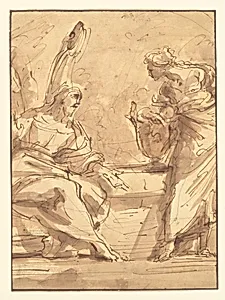
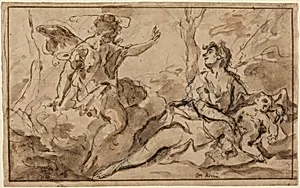
![Biblical Scene [verso]](https://images.artheonmuseum.org/nga/thumb/biblical-scene-verso-nga-73829.webp)