Ctrl K
1807–1873
Utagawa Sadahide was born Hashimoto Kenjirō in 1807 in Fusa Province, in the area of modern Chiba Prefecture, Japan. In the 1820s he entered the studio of the enormously prolific and influential master Utagawa Kunisada, becoming one of Kunisada's most prominent pupils and adopting the studio name Sadahide along with the Utagawa school's celebrated lineage. By 1828 his name appeared on a monument listing Kunisada's students, a mark of recognised standing within the school. His earliest surviving published work, the illustrated book Misaogata Tsuge no Ogushi (1824), dates from the beginning of his independent career.
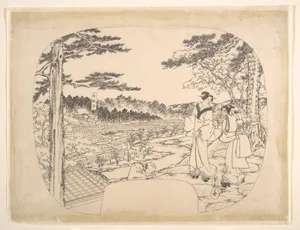
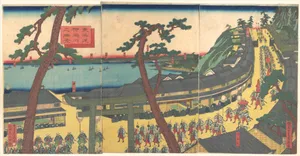
Sadahide's early output was rooted in the traditional ukiyo-e subjects of bijin-ga — idealized portraits of beautiful women — but from the 1830s and 1840s onward he broadened his range substantially, moving into warrior prints (musha-e) and landscape. His interests eventually encompassed geography, foreign peoples, and the wider world, reflecting the intellectual currents stirring in Edo-period Japan as contact with foreign nations became unavoidable. Around 1850 he produced Kaigai Shinwa (New Overseas Stories), a five-volume work documenting the First Opium War in China, and in 1855 he published Kita Ezo zusetsu (Northern Japan Illustrated), a four-volume depiction of the Ainu people of Hokkaido that combined ethnographic observation with artistic skill.
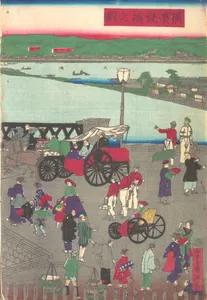
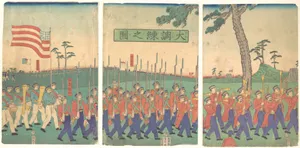
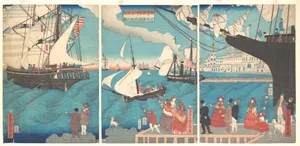
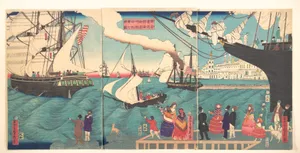
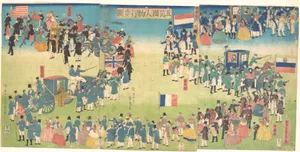
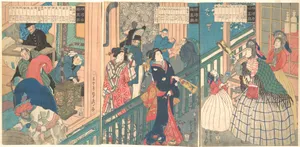
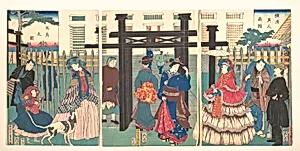
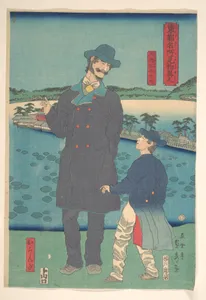
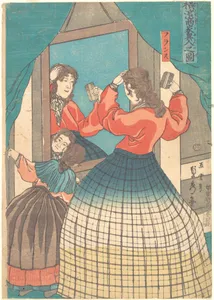
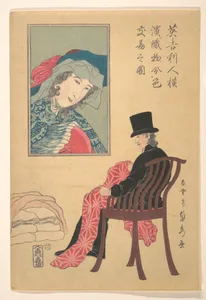
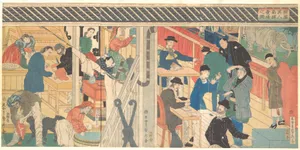
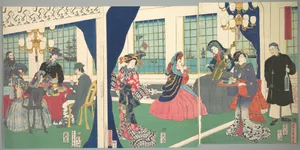
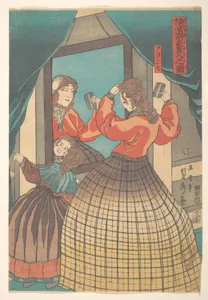
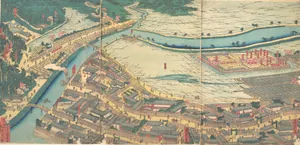
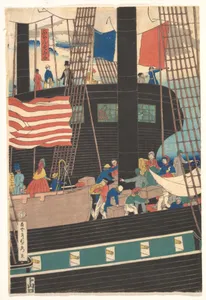
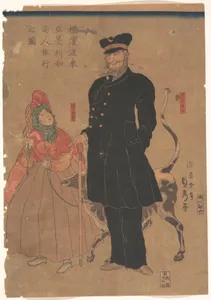
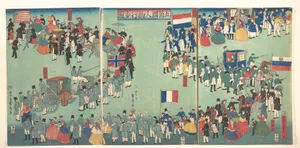
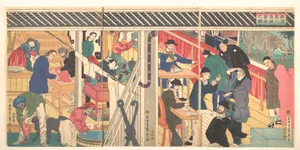
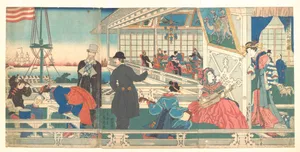
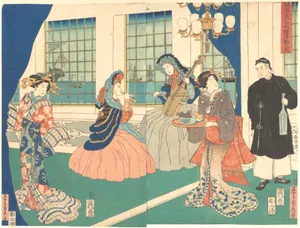
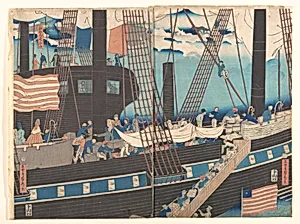
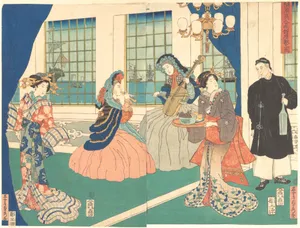
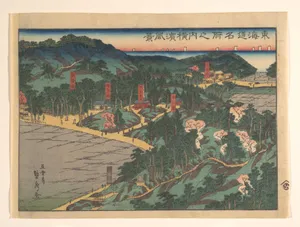
Sadahide's greatest popular success came with his Yokohama-e — prints depicting the foreign merchants, diplomats, sailors, and goods that flooded into the newly opened treaty port of Yokohama after Japan's forced opening in the 1850s. These images satisfied an intense Japanese public curiosity about the outside world, and by 1868 Sadahide had become the best-selling ukiyo-e artist of his day. His work was selected to represent Japan at the International Exposition of 1867 in Paris. He later moved to Nagasaki, where he created a panorama ten metres in length, and in 1871 produced a breathtaking panoramic print of Yokohama the size of a tatami mat. He died in 1878 or 1879, and the first major exhibition dedicated to his work was not held until 1997, underscoring how much of his legacy remained to be recovered and celebrated.