
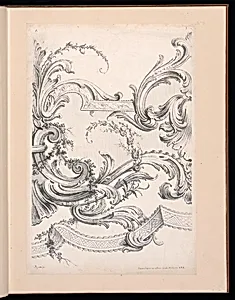
Acanthus Leaf Frieze Design
Classification
Bound print
Department
Smithsonian Collection
Museum
Smithsonian American Art Museum
Credit
Purchased for the Museum by the Advisory Council
Accession Number
1921-6-213-3
Rights
Public Domain
About this artwork
Research in Progress
Art Historical Context
Created by the French artist Alexis Peyrotte between 1749 and 1761, this Acanthus Leaf Frieze Design showcases the enduring appeal of classical ornament in eighteenth-century Europe. Peyrotte, active during the reign of Louis XV, contributed to the rich tradition of decorative pattern books that circulated among artisans, architects, and patrons. The acanthus leaf, with its deeply lobed and curling foliage, has symbolized vitality and elegance since ancient Greek and Roman times, and its appearance here reflects the period’s fascination with refined natural forms. As a bound print now held in the Smithsonian American Art Museum, the work likely formed part of a larger collection of ornamental designs intended for practical use in architecture, furniture, or textiles. Its classification as a print underscores the importance of reproductive media in spreading artistic ideas across workshops and borders during the Enlightenment. Though research on this specific sheet continues, the frieze offers visitors a glimpse into how eighteenth-century designers bridged classical heritage with contemporary taste, transforming timeless motifs into fresh sources of inspiration.