
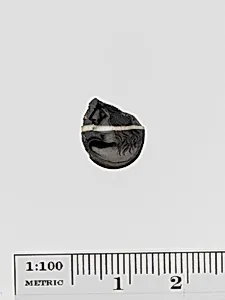
Agate ring stone
Unknown Artist
3rd century BCE
Medium
Sard
Dimensions
Length: 1/2 in. (1.3 cm)
Classification
Gems
Culture & Period
Greek · Hellenistic
Department
Greek and Roman Art
Museum
Metropolitan Museum of Art, New York, NY
Credit
Gift of John Taylor Johnston, 1881
Accession Number
81.6.17
Rights
Public Domain
Tags
Art Historical Context
This exquisite agate ring stone, in sard—a reddish-brown variety of chalcedony prized for its durability and fine polish—dates to the 3rd BCE, during Greece's Hellenistic period. Measuring just 1/2 inch (1.3 cm) in length, it belongs to the intimate world of engraved gems, typically set into signet rings personal seals, jewelry, talismans. H in the Metropolitan Museum of Art's Greek and Roman Art department, piece was a gift from John Taylor Johnston in 1, highlighting its enduring appeal to collectors. Hellenistic art marked a shift from classical idealism toward greater realism and expressiveness, influences evident even in miniature forms like this profile head intaglio. Artisans skillfully incised the stone to create a raised image when impressed into wax or clay, showcasing virtuoso engraving techniques that demanded precision under magnification. Such gems were status symbols among the elite, often depicting deities, rulers, or heroes in profile, blending artistry with practical function. These tiny masterpieces reveal the Hellenistic world's love for portraiture and personalization, bridging daily life and mythology. Though the exact subject remains unidentified, its survival speaks to the technical mastery of ancient Greek lapidaries, offering visitors a window into a sophisticated, cosmopolitan era.