
Alfred, Lord Tennyson
1826 to 1850
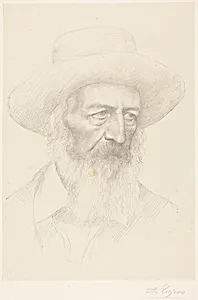
Medium
lithograph
Classification
Department
CG-E
Museum
National Gallery of Art, Washington, D.C.
Credit
Rosenwald Collection
Accession Number
1943.3.5461
Rights
Public Domain
Art Historical Context
In the National Gallery of Art's Rosenwald Collection,phonse Legros's lithograph *Alfred Lord Tennyson* offers compelling portrait of one of Victorian England's greatest poets. Created between 1826 and 1850, this print Tennyson (1809–1892), celebrated for epic like *In Memoriam* and *The Lady of Shalott*, during his formative years as he rose to literary prominence. Legros, a French-born artist who later worked in Britain, was renowned for his realistic portraits and contributions to the 19th-century etching and print revival, blending meticulous detail with expressive depth. Lithography, the medium here, revolutionized printmaking in the early 1800s by allowing artists to draw directly on stone for fluid, tonal reproductions—ideal for disseminating portraits of cultural icons like Tennyson. Legros's technique highlights the poet's thoughtful gaze and tousled hair, evoking the Romantic spirit of the era while showcasing lithography's versatility for mass appeal. This work, classified as a print in the CG-E department, underscores Tennyson's enduring cultural legacy and Legros's skill in bridging painting and print traditions, inviting visitors to ponder the intersection of poetry and visual art in 19th-century Britain.
About the Artist
Alphonse Legros · 1837–1911
Alphonse Legros (1837–1911) was born in Dijon, France, and trained in Paris at the drawing school of Horace Lecoq de Boisbaudran, whose unconventional teaching method — which emphasised memory drawing and acute observation over academic convention — would leave a lasting mark on Legros's practice. At Lecoq's school he formed friendships with Jules Dalou and Auguste Rodin that endured throughout hi...