
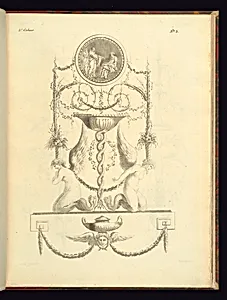
Arabesque Design
Classification
Department
Smithsonian Collection
Museum
Smithsonian American Art Museum
Credit
Purchased for the Museum by the Advisory Council
Accession Number
1921-6-335-7
Rights
Public Domain
About this artwork
Research in Progress
Art Historical Context
### Arabesque Design Created in 1788 by French artist Étienne de Lavallée (1735–1802), *Arabesque Design* is a captivating print that exemplifies the ornate decorative arts of late 18th-century France. Just a year before the French Revolution, this work captures the elegance of the Ancien Régime, when intricate patterns adorned everything from textiles and wallpapers to furniture and architecture. Lavallée, active during the Rococo-to-Neoclassical transition, specialized in such designs, drawing from Renaissance grotesques and exotic influences like Islamic motifs to weave flowing vines, foliage, and fantastical elements into harmonious compositions. As a print—likely an etching or engraving—*Arabesque Design* served a practical purpose: disseminating sophisticated patterns to artisans across Europe. Prints like this were revolutionary tools for standardizing beauty, bridging courtly luxury with emerging bourgeois tastes. Its presence in the Smithsonian American Art Museum's collection, purchased by the Advisory Council, highlights its enduring appeal, connecting European decorative traditions to American appreciation for refined craftsmanship. Though research continues, this piece invites us to trace the arabesque's timeless allure, a motif that symbolizes endless creativity and cultural exchange. (198 words)