
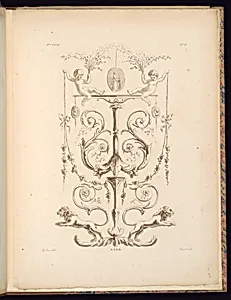
Arabesque Ornament Design
Classification
Department
Smithsonian Collection
Museum
Smithsonian American Art Museum
Credit
Purchased for the Museum by the Advisory Council
Accession Number
1921-6-337-3
Rights
Public Domain
About this artwork
Research in Progress
Art Historical Context
Created in 1788 by French artist Thomas Le Clerc (. 1740–. 1796), this print titled Arabesque Ornament Design captures the refined decorative spirit of late 18thcentury France. Produced just before the Revolution, it belongs to a tradition of ornamental prints that circulated widely among designers and craftsmen. These works served as practical models, helping to spread elegant patterns for use on furniture, interiors, textiles, and other luxury objects of the era. Arabesque motifs typically feature flowing, interlacing lines inspired by nature—vines, foliage, and scrolls that create a sense of graceful movement. In European decorative arts, such designs blended earlier influences into a distinctly fashionable language of ornament. As a print, Le Clerc’s work highlights the important role of graphic techniques in making sophisticated ideas accessible beyond elite workshops, allowing styles to travel and evolve across media. Now in the Smithsonian American Art Museum collection, acquired through the Advisory Council, the piece offers a window into the artistry behind everyday beauty in pre-Revolutionary France. Though research on Le Clerc continues, this design reminds us how prints preserved and shared the visual culture of their time, inviting viewers to appreciate the skill and imagination that shaped 18th-century taste.