
Bag Called a "Long Life" Bag
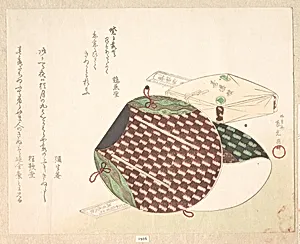
Medium
Woodblock print (surimono); ink and color on paper
Dimensions
8 5/16 x 10 9/16 in. (21.1 x 26.8 cm)
Classification
Prints
Culture & Period
Japan · Edo period (1615–1868)
Department
Asian Art
Museum
Metropolitan Museum of Art, New York, NY
Credit
H. O. Havemeyer Collection, Bequest of Mrs. H. O. Havemeyer, 1929
Accession Number
JP1926
Rights
Public Domain
Art Historical Context
Welcome to the Asian Art galleries, where we spotlight the exquisite woodblock print *Bag Called a "Long Life" Bag* byūgetsusai Shinkō, a masterful creator of the Edo period (1615–8). This intimate surimono—measuring just 8 5/16 x 10 9/16 inches—captures the refined artistry of private Japanese prints, produced on commission for poetry societies or celebrations. Crafted ink and vibrant color on, it exemplifies the period ukiyo-e tradition blending technical precision with cultural symbolism. Surimono like this one stand out from mass-produced prints for their luxurious touches, such as embossed patterns, metallic pigments, and poetic inscriptions, often evoking good fortune. The title nods to a "long life" bag, a motif rooted in Japanese folklore where such pouches symbolized longevity, prosperity, and protection—perhaps filled with auspicious items like rice or herbs. Ryūgetsusai Shinkō's style highlights everyday objects with whimsical elegance, reflecting Edo Japan's vibrant urban culture amid peace and prosperity. Generously bequeathed through the H. O. Havemeyer Collection in 1929, this gem from the Metropolitan Museum of Art invites us to ponder how art wove wishes for enduring joy into delicate paper. A perfect emblem of Japan's poetic print legacy!