
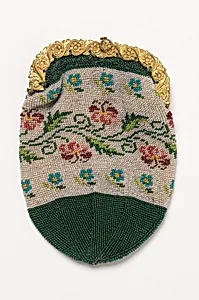
Bag (tobacco pouch)
early 19th century
Classification
costume & accessories
Department
Smithsonian Collection
Museum
Smithsonian American Art Museum
Credit
Smithsonian American Art Museum
Accession Number
1908-3-6
Rights
Public Domain
About this artwork
Research in Progress
Art Historical Context
This charming tobacco pouch, dating to the early 19th century, a glimpse into everyday American life during a time when tobacco was a cornerstone of culture and economy. Classified as costume and accessories, it would have been an essential carryall for pipe smokers, holding finely shredded leaves for convenient use on the go. Housed in the Smithsonian American Art Museum's collection this unassuming bag highlights the practical artistry of ordinary objects from the era, when personal accessories blended utility with subtle craftsmanship. Though the artist and medium remain unknown— with ongoing research promising more insights—this pouch reflects broader historical trends. The early 1800s saw tobacco production booming in the U.S., particularly in the South, fueling social rituals from taverns to frontier camps. Such pouches, often handmade, varied by region and maker, sometimes featuring embroidery, weaving, or leatherwork that spoke to cultural exchanges among settlers, Native Americans, and immigrants. As a preserved artifact, it invites us to ponder the intimate habits of our ancestors, turning a simple pouch into a portal to 19th-century America. What stories of travel, trade, or tradition does it hold? Future scholarship may reveal even more.
About the Artist
Unknown
The artist designated as "Unknown" in our virtual museum's collection exemplifies a poignant chapter in art history: creators whose identities have faded into obscurity despite the enduring power of their work. With only one known artwork attributed to them in our holdings, this figure represents countless anonymous hands that shaped visual culture across centuries. Museums worldwide, including th...