
Inscribed Bowl
dated A.H. 942/ 1535–36 CE
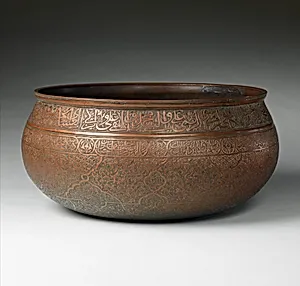
Medium
Copper; tinned, engraved, and inlaid with black compound
Dimensions
H. 6 9/16 in. (16.7 cm) Diam. 13 3/4 in. (34.9 cm)
Classification
Metal
Department
Islamic Art
Museum
Metropolitan Museum of Art, New York, NY
Credit
Edward C. Moore Collection, Bequest of Edward C. Moore, 1891
Accession Number
91.1.615
Rights
Public Domain
Art Historical Context
Behold the *Inscribed Bowl*, a creation by Al-Imami Sayyid Naqqash al-Husaini, dated A. 942 (1535–36 CE). Crafted from copper, this wide, shallow vessel—measuring 6 9/16 inches high and 13 3/4 inches in diameter—was tinned for a silvery sheen, meticulously engraved, and inlaid with a black compound, likely a form of niello for striking contrast. Such techniques highlight the pinnacle of 16th-century Islamicworking, where artisans transformed everyday objects into surfaces for intricate decoration and meaningful text. In the vibrant world of Islamic art, inscribed metalware like this bowl served both practical and ceremonial purposes, often gracing dining tables or royal feasts. The artist's title, "Naqqash" (engraver), underscores his specialized skill in chasing fine lines and inlays, while "Sayyid al-Husaini" evokes a revered lineage tied to Shiʿi heritage, suggesting possible Persian or Ottoman origins during a golden age of craftsmanship under Safavid or Timurid influences. These bowls were prized for blending utility with artistry, preserving poetry, blessings, or invocations that reflected cultural and spiritual values. Now part of the Metropolitan Museum of Art's Edward C. Moore Collection, this piece invites us to appreciate the enduring elegance of Islamic metalwork, where every curve and inscription tells a story of devotion and dexterity.