
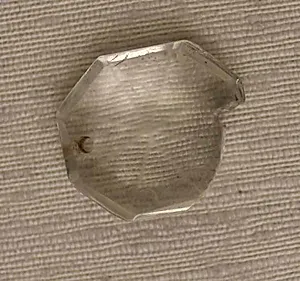
Bead
Unknown Artist
8th–13th century
Medium
Rock crystal; cut and pierced
Dimensions
Ht. 5/16 in. (0.8 cm) D. 3/4 in. (1.9 cm) W. 11/16 in. (1.7 cm)
Classification
Stone
Department
Islamic Art
Museum
Metropolitan Museum of Art, New York, NY
Credit
Rogers Fund, 1948
Accession Number
48.101.199
Rights
Public Domain
Art Historical Context
This exquisite rock crystal bead, crafted between the 8th and 13th centuries, hails from the vibrant world of Islamic art. Measuring just 5/16 inch high and nearly 3/4 inch in diameter, its petite form belies its luxurious appeal. Carved from clear, durable rock crystal—a prized form of quartz known for its transparency and Mohs hardness of 7—this bead was meticulously cut and pierced, allowing it to be strung intolaces, bracelets, or prayer beads. During the Islamic Golden Age, spanning the Abbasid Caliphate and beyond, artisans across the Middle East and North Africa excelled in hardstone working. Techniques like precise cutting and drilling through tough crystal required specialized tools, often lapidary wheels powered by foot or water. Such beads were not everyday items but symbols of wealth and refinement, traded along Silk Road routes from sources in India, Yemen, or the Arabian Peninsula. In Islamic culture, beads like this held practical and spiritual significance, adorning personal jewelry or forming tasbih (prayer strings) for counting devotional recitations. Its survival into the Metropolitan Museum of Art's collection, acquired via the Rogers Fund in 1948, offers a tangible glimpse into the era's masterful craftsmanship and enduring aesthetic values.