
Bead
Unknown Artist
6th–8th century
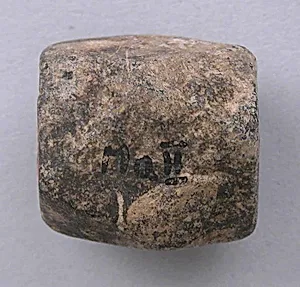
Medium
Glass; blown
Dimensions
Ht. 3/4 in. (1.9 cm) Diam. 11/16 in. (1.7 cm) Wt. 0.34 oz. (9.6 g)
Classification
Glass
Department
Islamic Art
Museum
Metropolitan Museum of Art, New York, NY
Credit
Rogers Fund, 1932
Accession Number
32.150.221
Rights
Public Domain
Art Historical Context
This delicate glass bead, crafted between the 6th and 8th centuries, exemplifies exquisite artistry of early Islamic glassmaking. Measuring just 3/4 inch high and 11/16 inch in diameter, it weighs a mere 0.34, highlighting the precision required for such diminutive objects. Acquired through the Rogers Fund in 1932 and housed in the Metropolitan Museum of's Islamic Art Department, represents everyday luxury from a transformative era bridging late antiquity and the rise of Islam. The bead's medium—blown glass—marks a pinnacle of ancient technology, a method perfected in the Near East where artisans inflated molten glass into molds or free forms. This innovation allowed for lightweight, vibrant objects that were both functional and beautiful, far surpassing earlier solid-glass techniques. In the Islamic world, glass beads like this were produced in vast quantities, showcasing regional mastery in workshops from Syria to Egypt. Culturally, such beads adorned jewelry, amulets, and garments, serving as trade goods along Silk Road routes and symbols of personal status. Though simple in form, this survivor whispers of vibrant markets and skilled hands, inviting us to marvel at how tiny artifacts illuminate a vast historical tapestry.