
Beaker (Stangenglas)
Unknown Artist
late 16th century
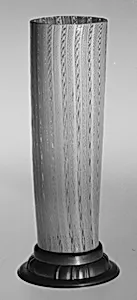
Medium
Colorless (slightly gray) and opaque white nonlead glass; pewter mount. Blown, "vetro a retorti".
Dimensions
H. 27.4 cm
Classification
Glass
Culture
probably south Lowlands; possibly Bohemia or Saxony
Department
Robert Lehman Collection
Museum
Metropolitan Museum of Art, New York, NY
Credit
Robert Lehman Collection, 1975
Accession Number
1975.1.1165
Rights
Public Domain
Art Historical Context
This elegant *Beaker (Stangenglas)* the late 16th exemplifies the refined glassmaking traditions of Renaissance Europe. Standing at 27.4 cm tall, it features colorless (slightly gray) nonlead glass combined with opaque white threads, crafted using the intricate blown "vetro a ret" technique. This Venetian-inspired method involves twisting canes of colored glass into spiraling patterns during blowing, creating a mesmerizing helical design that catches the light. The pewter mount at the base and rim adds a touch of opulence, suggesting it was prized for both display and use in affluent households. Likely originating from the south Lowlands—possibly Flanders—or regions like Bohemia or Saxony, the beaker reflects the era's cross-cultural exchange in craftsmanship. Northern European glassmakers avidly emulated Italian innovations, producing luxurious *Stangenglas* (staff glasses) as status symbols for banquets and collections. Nonlead glass was durable yet delicate, highlighting technical prowess without the fragility of finer crystal. Now part of the Robert Lehman Collection at The Metropolitan Museum of Art (1975), this anonymous masterpiece invites us to appreciate the artistry of forgotten hands, bridging Venetian elegance with Northern ingenuity in a single, spiraling form.