
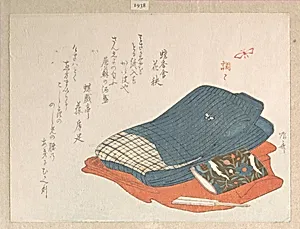
Bed-clothing
Medium
Woodblock print (surimono); ink and color on paper
Dimensions
5 11/16 x 7 1/2 in. (14.4 x 19.1 cm)
Classification
Prints
Culture & Period
Japan · Edo period (1615–1868)
Department
Asian Art
Museum
Metropolitan Museum of Art, New York, NY
Credit
H. O. Havemeyer Collection, Bequest of Mrs. H. O. Havemeyer, 1929
Accession Number
JP1938
Rights
Public Domain
Art Historical Context
Ryūryūkyo Shinsai's *Bed-clothing* is delicate woodblock print (imono) from Japan's Edo period (16151868), a time when ukiyo-e artists captured the "floating world" of everyday beauty and transience. Created in ink and color on paper, this intimate 5 11/16 x 7 1/2 in. work exemplifies surimono—privately commissioned prints often made for New Year's greetings or poetry gatherings among literati. Shinsai, a master of the genre, specialized in these luxurious, small-format pieces, blending technical finesse with poetic subtlety. The title evokes a serene domestic scene, likely depicting folded futons or bedding, symbols of comfort and impermanence in Japanese culture. Surimono like this one stand out for their refined techniques: vibrant colors achieved through multiple woodblocks, subtle gradations (bokashi), and sometimes embossing or metallic pigments for a tactile, jewel-like quality. Unlike mass-produced ukiyo-e, surimono were elite connoisseur items, showcasing the artist's skill in miniaturizing beauty. Housed in the Metropolitan Museum of Art's Asian Art Department from the H. O. Havemeyer Collection, this print offers a window into Edo-era refinement, where art intertwined with social rituals and seasonal joys. A charming reminder of how ordinary objects could inspire profound elegance.
About the Artist
Ryūryūkyo Shinsai · 1799–1823
Ryūryūkyo Shinsai (柳々居辰斎), active from 1799 to 1823, was a prominent Japanese ukiyo-e printmaker based in Edo (modern Tokyo), renowned for his mastery of surimono—luxurious, privately commissioned woodblock prints produced for elite poetry circles and New Year's celebrations. He began his training under Tawaraya Sōri before becoming a student of the legendary Katsushika Hokusai, from whom he recei...