
Textile Fragment
Unknown Artist
14th century
Medium
Linen; embroidered with silk
Dimensions
H. 10 in. (25.4 cm) W. 10 in. (25.4 cm)
Classification
Textiles-Embroidered
Department
Islamic Art
Museum
Metropolitan Museum of Art, New York, NY
Credit
Gift of Nelly, Violet and Elie Abemayor, in memory of Michel Abemayor, 1978
Accession Number
1978.546.52
Rights
Public Domain
Art Historical Context
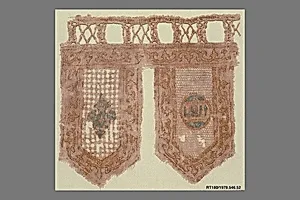
This exquisite 14th-century textile fragment crafted from linen and embroidered with vibrant silk threads, offers a glimpse into the refined artistry of Islamic textile production. Measuring a modest 10 by 10 inches, it survives as a precious remnant, likely from a larger garment, curtain, or furnishing. Housed in the Metropolitan Museum of Art's Islamic Department, it was generously gifted in 1978 the Abemayor in memory of Michel Abemayor. In the medieval Islamic world, textiles like this were highly prized for their beauty and utility, often traded along bustling Silk Road routes and adorning mosques, palaces, and homes. The use of durable linen as a base, combined with luxurious silk embroidery, highlights the technical prowess of anonymous artisans who blended functionality with opulence. Silk, sourced from afar, symbolized wealth and cultural exchange, while embroidery techniques—such as counted-thread stitching or couching—allowed for intricate patterns that conveyed spiritual or geometric motifs central to Islamic design. Though its exact origin and full design remain mysteries, this fragment embodies the era's mastery of craft, where every stitch reflected devotion to beauty and harmony. Visitors are invited to imagine it as part of a vibrant tapestry of daily life in a thriving medieval society.