
Bottle-Shaped Vase
Qing dynasty (1644–1911), Yongzheng reign mark and period (1723–1735)
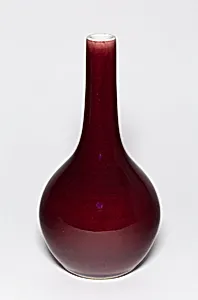
Medium
Porcelain with sang de boeuf glaze
Dimensions
19.9 × 10.2 cm (7 13/16 × 4 in.); Diam.: 10.2 cm (4 in.)
Classification
vase
Department
Arts of Asia
Museum
Art Institute of Chicago
Accession Number
42774
Rights
Public Domain
Art Historical Context
This exquisite Bottle-Shaped Vase hails from the Qing dynasty's Yongzheng reign (1723–1735), a golden era for Chinese porcelain production at the imperial kilns of Jingdezhen. Standing at 19.9 cm tall with a 10.2 cm diameter, its graceful bottle form—narrow neck flaring to a rounded body—was ideal for displaying flowers or holding incense, embodying the refined aesthetics of the imperial court. The vase bears a Yongzheng reign mark, confirming its authenticity and prestigious origin. Crafted from porcelain and coated in sang de boeuf ("ox blood") glaze, this piece showcases one of the most challenging and coveted techniques of the period. Achieving the deep, vibrant crimson hue required precise control of kiln temperatures and copper oxide in the glaze, often resulting in subtle flame-like streaks that mimic fresh blood. Yongzheng emperor's passion for monochrome wares elevated such innovations, making them symbols of technical mastery and imperial luxury. In the Arts of Asia collection at the Art Institute of Chicago, this vase highlights China's porcelain legacy, prized by collectors worldwide for its rarity and beauty. It invites visitors to appreciate the blend of artistry and alchemy that defined Qing ceramics.
About the Artist
Unknown
The artist designated as "Unknown" in our virtual museum's collection exemplifies a poignant chapter in art history: creators whose identities have faded into obscurity despite the enduring power of their work. With only one known artwork attributed to them in our holdings, this figure represents countless anonymous hands that shaped visual culture across centuries. Museums worldwide, including th...