
Bound print
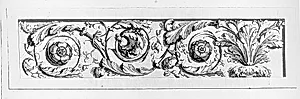
Classification
Bound print
Department
Smithsonian Collection
Museum
Smithsonian American Art Museum
Credit
Purchased for the Museum by the Advisory Council
Accession Number
1921-6-204-42
Rights
Public Domain
About this artwork
Research in Progress
Art Historical Context
Gilles Paul Cauvet (1–1788), a prominent French ornamental designer and engraver, intricate works that epitomized the elegant Neoclassical style of late 18th-century France. His *Bound Print*, held in the Smithsonian American Art's collection (purchased by the Advisory Council), reflects the era's fascination with refined decorative arts. As a bound print—likely an engraved design preserved in an album or volume—it showcases Cauvet's mastery in translating opulent motifs for furniture, architecture, and interiors, bridging artistry with craftsmanship during the Louis XVI period. Though the exact date and medium remain under research, Cauvet's prints were pivotal in disseminating sophisticated designs across Europe and beyond. Trained as a sculptor and draftsman, he produced influential pattern books that inspired artisans, highlighting the Enlightenment-era shift toward symmetry, classical motifs, and technical precision in printmaking. This piece underscores the interconnectedness of French decorative traditions and American collecting interests, as evidenced by its place in the Smithsonian's holdings. Visitors will appreciate how Cauvet's work captures a golden age of design innovation, where beauty met utility—perfect for evoking the grandeur of pre-Revolutionary France. Ongoing research promises deeper insights into this gem.