
Cabasset
Unknown Artist
ca. 1575–80
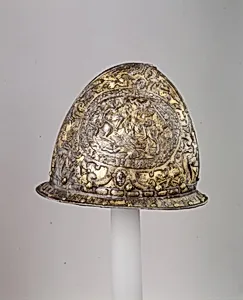
Medium
Steel, gold, silver
Dimensions
H. 8 1/4 in. (21 cm); W. 8 5/8 in. (21.9 cm); D. 10 1/2 in. (26.7 cm); Wt. 2 lb. 12 oz. (1247 g)
Classification
Helmets
Culture
Italian, Milan
Department
Arms and Armor
Museum
Metropolitan Museum of Art, New York, NY
Credit
Gift of William H. Riggs, 1913
Accession Number
14.25.1853
Rights
Public Domain
Tags
Art Historical Context
Step into the clangor of Renaissance battlefields with this exquisite *Cabasset*, a helmet crafted in Milan, Italy, around 1575–80. Milan was a renowned center for arms production during the Italian Renaissance, supplying elite armor to soldiers across Europe amid the turbulent Wars of Religion and conflicts with the Ottoman Empire. This open-faced helmet, designed for light infantry like pik or arquebusiers, features a distinctive peaked skull for deflecting blows, offering protection without sacrificing visibility or mobility— for the tag-team chaos of battles involving men on. Forged from steel and adorned with gold and silver, the cabasset showcases the period's masterful metalworking techniques. The precious metals likely served both decorative and status-enhancing purposes, with gilding or inlay elevating it from utilitarian gear to a work of functional art. At just 8¼ inches high and weighing around 2¾ pounds, its compact form (H. 8¼ in.; W. 8⅝ in.; D. 10½ in.) balanced defense with wearability, reflecting Italian armorers' blend of engineering prowess and aesthetic flair. A gift to the Metropolitan Museum of Art from William H. Riggs in 1913, this cabasset transports us to an era when armor was both shield and statement, embodying the grit and glamour of 16th-century warfare.