
清 刺繡行書竹聯|Calligraphy Couplet
Unknown Artist
18th century
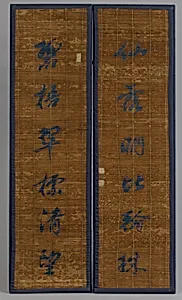
Medium
Silk embroidery on bamboo
Dimensions
H. 30 in. (76.2 cm); W. 12 in. (30.5 cm)
Classification
Bamboo
Culture & Period
China · Qing dynasty (1644–1911)
Department
Asian Art
Museum
Metropolitan Museum of Art, New York, NY
Credit
Purchase, The Vincent Astor Foundation Gift, 2004
Accession Number
2004.191a, b
Rights
Public Domain
Tags
Art Historical Context
This exquisite *Calligraphy Couplet* 18th-century Qing dynasty (1644–1911) the era's mastery of decorative arts. Titled *清 刺繡行書竹聯*, it features elegant running script (xingshu) poetry embroidered in silk on bamboo, measuring 30 inches tall by 12 inches wide. Produced during the height of Qing refinement, such couplets were prized hanging scrolls or panels, often adorning homes, temples, or scholarly studios to convey auspicious messages or celebrate nature's harmony. The medium—silk embroidery on bamboo—highlights innovative techniques where artisans mimicked fluid brushstrokes with precise needlework, achieving the spontaneity of xingshu calligraphy. Bamboo, a symbol of resilience and integrity in Chinese culture, likely inspires the theme, as "bamboo couplet" suggests poetic verses evoking its graceful form. This fusion of textile artistry and literati tradition underscores embroidery's elevation from utilitarian craft to high art in Qing workshops. Acquired by the Metropolitan Museum of Art through the Vincent Astor Foundation in 2004, this piece invites visitors to appreciate China's poetic soul: where words, woven with silk threads, bloom eternally on humble bamboo.