
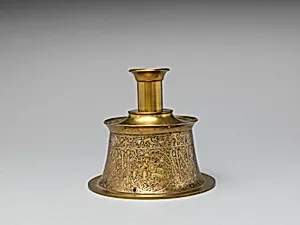
Candlestick
Unknown Artist
early 14th century
Medium
Brass; originally engraved and inlaid with silver
Dimensions
H. 5 15/16 in. (15.1 cm) Diam. 6 9/16 in. (16.7 cm) Wt. 25.7 oz. (728.7 g)
Classification
Metal
Department
Islamic Art
Museum
Metropolitan Museum of Art, New York, NY
Credit
Edward C. Moore Collection, Bequest of Edward C. Moore, 1891
Accession Number
91.1.524
Rights
Public Domain
Tags
Art Historical Context
This elegant brass candlestick, crafted by an unknown artist in the early th century, hails from the Islamic world and exemplifies the exquisite metalwork traditions of the period. Standing just under 6 inches tall with a 6½-inch diameter base and weighing a substantial 25.7 ounces, it was engraved and inlaid with silver, a that created shimmering contrasts to highlight intricate motifs—most notably horses and other animals, as suggested by its decorative tags. In the Islamic Art tradition, such objects blended utility with artistry, illuminating homes, mosques, or palaces while serving as status symbols. The engraving and silver inlay reflect advanced Mamluk-era craftsmanship, likely from Syria or Egypt, where artisans masterfully depicted dynamic animal forms symbolizing power, speed, and the natural world. Though the silver has faded over time, the surviving brass reveals the enduring skill in balancing form and function. Acquired through the Edward C. Moore Collection and now housed in the Metropolitan Museum of Art's Islamic Art department, this candlestick offers a window into medieval Islamic luxury. Visitors can appreciate how everyday items became canvases for cultural expression, evoking the vibrancy of a bygone era.