
Box
Unknown Artist
second half 14th century
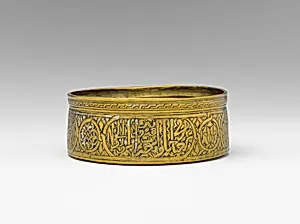
Medium
Brass; engraved and originally inlaid with silver
Dimensions
H. 2 1/8 in. (5.4 cm) Diam. 5 1/4 in. (13.3 cm)
Classification
Metal
Department
Islamic Art
Museum
Metropolitan Museum of Art, New York, NY
Credit
Edward C. Moore Collection, Bequest of Edward C. Moore, 1891
Accession Number
91.1.560
Rights
Public Domain
Art Historical Context
This exquisite brass box, crafted by an unknown artist in the half of the 14 century, exemplifies the refined metalworking traditions of Islamic art. Measuring just 2⅛ inches high and 5¼ inches in diameter, its compact, cylindrical form suggests it was designed for personal use—perhaps to hold spices, jewelry, or cosmetics. The surface bears intricate engravings, originally enhanced with silver inlays that would have gleamed against the warm brass, creating a luxurious contrast now softened by time. Engraving and inlay techniques were hallmarks of medieval Islamic craftsmanship, particularly in regions like Mamluk Egypt and Syria, where metalworkers elevated everyday objects into art. The meticulous designs likely featured arabesques, geometric patterns, or calligraphy, reflecting the era's emphasis on harmony, infinity, and spiritual symbolism. Such boxes were prized possessions, symbols of wealth and cultural sophistication, traded along Silk Road routes. Today, this piece graces the Metropolitan Museum of Art's Islamic Art department, part of the Edward C. Moore Collection bequeathed in 1891. It invites us to marvel at the anonymous artisans whose skill endures, bridging 14th-century opulence with our modern gaze.