
Capital
Unknown Artist
6th–7th century
Medium
Limestone; carved in relief
Dimensions
H. 18 1/8 in. (46 cm) Max. W. 20 1/2 in. (52 cm)
Classification
Sculpture
Department
Islamic Art
Museum
Metropolitan Museum of Art, New York, NY
Credit
Rogers Fund, 1910
Accession Number
10.175.28
Rights
Public Domain
Art Historical Context
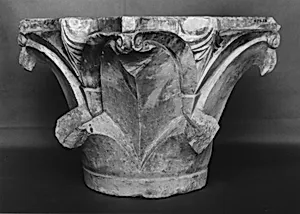
This intricately carved limestone capital, to the 6th–7th century, hails from the early days of Islamic art, a period when architectural sculpture bridged late antique traditions and emerging Islamic aesthetics. Measuring about 18 inches high and 20 inches wide, it once crowned a column, supporting arches or beams in a grand structure—likely a mosque, palace or public building in the expanding Islamic world. Crafted in low relief, the capital showcases the skilled stoneworking techniques of the era, where artisans chiseled motifs directly into the durable limestone to create depth and shadow play. Such sculptures were not merely functional but symbolic, embodying the fusion of Byzantine, Sasanian, and local styles that defined early Islamic architecture. Acquired through the Rogers Fund in 1910, this piece at the Metropolitan Museum of Art offers a tangible glimpse into the craftsmanship that adorned the heart of nascent Islamic civilizations. Its cultural significance lies in highlighting how early Muslim artisans adapted pre-Islamic forms, paving the way for the ornate capitals seen in later landmarks like the Great Mosque of Damascus. A quiet testament to artistic continuity amid profound historical change.