
Card Table
1755–90
Medium
Mahogany with tulip poplar, white oak, and white pine
Dimensions
69.9 × 88.3 (open) × 87.6 cm (27 1/2 × 34 3/4 × 34 1/2 in.)
Classification
table
Department
Arts of the Americas
Museum
Art Institute of Chicago
Accession Number
45522
Rights
Public Domain
About this artwork
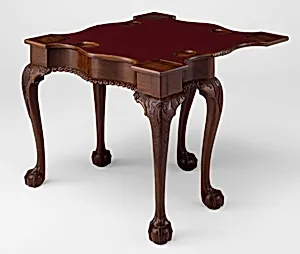
When not in use, this card table was meant to be placed against a wall. When needed, a third “swing” leg at the back of the table was placed at a perpendicular angle to support the open top. Opened, the table reveals four inset squared corners where candlesticks were placed. The recessed ovals held playing pieces known as fish because of their shape. The pieces were usually made of mother-of-pearl or ivory, and were kept in a small, secret drawer in the rear of the table.
Art Historical Context
This elegant card table, crafted between 1755 and 1790, exemplifies the refined furniture-making traditions of colonial America. Made primarily from rich mahogany—a premium imported wood symbolizing wealth and status—with supporting tulip poplar, white, and white pine, it measures 27½ × 34¾ × 34½ inches open. Housed in the Art Institute of Chicago's Arts the Americas department, this table was designed for sociable card games like whist or loo, which were staples of elite leisure in prosperous households from New England to the South. The use of multiple woods highlights skilled joinery techniques of the era, where mahogany veneers and secondary native hardwoods ensured durability and visual appeal. Its baize-lined playing surface (inferred from standard card table design) would have accommodated four players comfortably, reflecting the period's growing emphasis on hospitality and genteel entertainment amid rising colonial prosperity. As an anonymous masterpiece, this table offers a window into 18th-century American craftsmanship, blending European influences with local ingenuity. It reminds us how everyday objects became canvases for artistry, turning gaming into a display of sophistication.