
Carpet
Unknown Artist
16th century
Medium
Wool (warp, weft and pile); asymmetrically knotted pile
Dimensions
H. 80 in. (203.2 cm) W. 51 in. (129.5 cm)
Classification
Textiles-Rugs
Department
Islamic Art
Museum
Metropolitan Museum of Art, New York, NY
Credit
Bequest of George Blumenthal, 1941
Accession Number
41.190.266
Rights
Public Domain
Art Historical Context
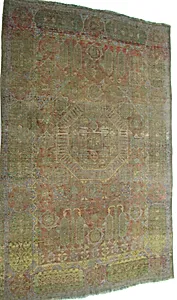
This magnificent 16th-century wool, standing at 80 inches high and 51 inches wide, exemplifies the exquisite textile artistry of the Islamic world. Crafted entirely from wool—for warp, weft, and pile—it employs the asymmetrically knotted pile technique a method that allows for dense, intricate patterns and exceptional durability. Such rugs were not mere floor coverings but prized possessions, often adorning homes, mosques, palaces. Housed in the Metropolitan Museum of Art's Department Islamic Art and classified among textiles-rugs, this piece reflects the height of weaving innovation during a golden age of Islamic culture, likely under Safavid or Ottoman patronage. The asymmetrical knot, distinct from symmetrical varieties in other traditions, enabled weavers to create finely detailed motifs symbolizing paradise gardens, geometric abstractions, or floral designs—hallmarks of spiritual and aesthetic expression. Bequeathed by George Blumenthal in 1941, this anonymous masterpiece invites visitors to appreciate the labor-intensive process: thousands of knots per square inch, dyed with natural pigments, blending utility with profound beauty. A testament to unseen artisans, it bridges centuries, evoking the vibrant trade routes that carried such treasures far beyond their origins.