
Carpet
1650-1700
Classification
Costume and Textile
Department
Smithsonian Collection
Museum
Smithsonian American Art Museum
Credit
Gift of Charles Lang Freer
Accession Number
F1912.67
Rights
Public Domain
Tags
About this artwork
To 1912
Art Historical Context
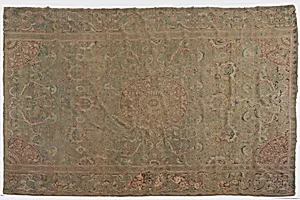
This exquisite Turkish carpet, dating from 1650-1700, hails from the Ottoman Empire during a golden age of Islamic textile arts. Woven in wool—likely from animal hair—it exemplifies the masterful rugmaking traditions of Turkey, where skilled artisans created durable, vibrant floor coverings for homes, mosques, and palaces. The carpet's floral patterns, a hallmark of Ottoman design, evoke lush gardens of paradise, blending natural motifs like blooming tulips and arabesques with symmetrical layouts that reflect Islamic geometric precision and harmony. These carpets were not mere utilities but symbols of wealth and cultural sophistication, often exported along Silk Road trade routes. Techniques such as symmetrical knotting ensured longevity and intricate detail, allowing patterns to unfold in mesmerizing depth. Part of the renowned Charles Lang Freer collection—gifted to the Smithsonian American Art Museum—this piece entered Western collections by 1912, preserving a slice of Islamic artistry for modern eyes. Visitors, imagine Ottoman weavers toiling by lamplight, their knots weaving stories of beauty and faith into every fiber. A true treasure of the Arts of the Islamic World!
About the Artist
Unknown
The artist designated as "Unknown" in our virtual museum's collection exemplifies a poignant chapter in art history: creators whose identities have faded into obscurity despite the enduring power of their work. With only one known artwork attributed to them in our holdings, this figure represents countless anonymous hands that shaped visual culture across centuries. Museums worldwide, including th...