
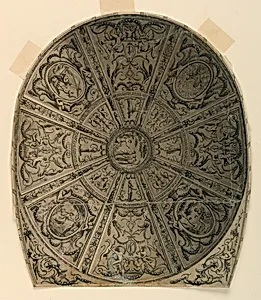
Ceiling Design: Decoration for theater
ca. 1790
Classification
theater
Department
Smithsonian Collection
Museum
Smithsonian American Art Museum
Credit
Museum purchase through gift of various donors and from Eleanor G. Hewitt Fund
Accession Number
1938-88-93
Rights
Public Domain
About this artwork
Research in Progress
Art Historical Context
This enchanting *Ceiling Design: Decoration Theater* (ca. 1790) offers a glimpse into the opulent world of late 18th-century American theater. Created during the early years of the United States, when public entertainments like plays and spectacles were blossoming in cities such as Philadelphia and New York, this likely envisioned a grand overhead canopy to immerse audiences in dramatic illusion. Theaters of this era drew inspiration from European traditions, transforming simple venues into lavish spaces that blurred the line between stage and spectator. Though the artist and medium remain unknown—reflecting ongoing research at the Smithsonian American Art Museum—the piece's classification as theater decoration underscores its role in enhancing the sensory experience of live performance. Ceiling designs were pivotal in creating illusions of infinite sky, gods, or architectural grandeur, often employing trompe l'oeil techniques to evoke awe. Acquired through museum purchase with gifts from various donors and the Eleanor G. Hewitt Fund, it highlights the Smithsonian's commitment to preserving ephemeral arts. As research progresses, this artifact invites us to ponder the unsung creators behind America's cultural awakening, reminding visitors of theater's power to unite and inspire.
About the Artist
Unknown
The artist designated as "Unknown" in our virtual museum's collection exemplifies a poignant chapter in art history: creators whose identities have faded into obscurity despite the enduring power of their work. With only one known artwork attributed to them in our holdings, this figure represents countless anonymous hands that shaped visual culture across centuries. Museums worldwide, including th...