
Church Facade
18th century
Medium
architecture
Classification
architecture
Department
Smithsonian Collection
Museum
Smithsonian American Art Museum
Credit
Museum purchase through gift of various donors and from Eleanor G. Hewitt Fund
Accession Number
1938-88-3467
Rights
Public Domain
About this artwork
Research in Progress
Art Historical Context
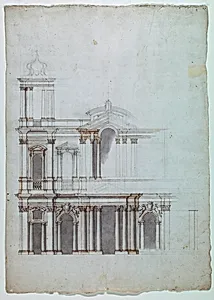
Nestled in the Smithsonian American Art Museum's collection,Church Facade* is captivating 18th-century architectural model by an unknown Italian artist Acquired through a museum purchase supported by generous donors and the Eleanor G Hewitt Fund, this piece exemplifies the intricate artistry of Italian ecclesiastical design. Though research into its precise origins continues, it invites visitors to ponder the grandeur of Baroque-era church fronts, where facades served as dramatic gateways to the divine. In 18th-century Italy, architecture flourished amid the lingering influences of the Baroque style, characterized by bold curves, ornate details, and theatrical symmetry meant to inspire awe and devotion. This facade likely captures those hallmarks—think scrolling cornices, pilasters, and niches for statues—common in Roman or Lombard churches built to counter Protestant austerity during the Counter-Reformation. As a model, it would have been a vital tool for architects and patrons, allowing them to visualize and refine monumental structures before construction. Today, *Church Facade* bridges European heritage with American collections, highlighting the Smithsonian's commitment to diverse artistic forms. Its presence reminds us how architecture, scaled down to tabletop size, preserves the splendor of Italy's sacred spaces, offering a tangible link to a vibrant era of faith and innovation.