
元 方從義 雲山圖 卷|Cloudy Mountains
ca. 1360–70
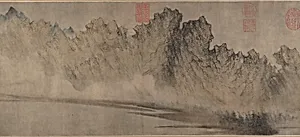
Medium
Handscroll; ink and color on paper
Dimensions
Image: 10 3/8 × 57 in. (26.4 × 144.8 cm) Overall with mounting: 10 5/8 in. × 28 ft. 1/4 in. (27 × 854.1 cm)
Classification
Paintings
Culture & Period
China · Yuan (1271–1368)
Department
Asian Art
Museum
Metropolitan Museum of Art, New York, NY
Credit
Ex coll.: C. C. Wang Family, Purchase, Gift of J. Pierpont Morgan, by exchange, 1973
Accession Number
1973.121.4
Rights
Public Domain
Tags
Art Historical Context
Fang Congyi's *Cloudy Mountains* (un Shan Tu Juan), around 1360–70 during China's Yuan dynasty (1271–1368), captures the ethereal beauty of towering peaks shrouded in mist. As a Daoist monk and literati painter, Fang specialized in monumental landscapes that evoke the sublime power of nature, blending ink washes with subtle colors to suggest infinite depth and spiritual harmony. This handscroll format—measuring over 28 feet when fully extended—invited intimate, sequential viewing, much like unrolling a personal meditation on the cosmos. Rendered in ink and light color on paper, the work exemplifies Yuan landscape traditions, where misty "clouds and mountains" (yun shan) symbolized Daoist ideals of transcendence and impermanence. Fang's technique employs layered ink densities to create dramatic verticality, with jagged peaks piercing veils of vapor, influencing later Ming artists. Acquired by the Metropolitan Museum of Art in 1973 from the C.C. Wang collection, it reflects the era's cultural resilience amid Mongol rule, when scholar-artists retreated into nature-inspired art. Today, *Cloudy Mountains* transports visitors to a timeless realm, reminding us of China's enduring reverence for the natural world's poetic mysteries.