
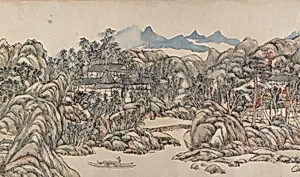
清 王原祁 輞川圖 卷|Wangchuan Villa
dated 1711
Medium
Handscroll; ink and color on paper
Dimensions
Image: 14 in. x 17 ft. 10 3/4 in. (35.6 x 545.5 cm) Overall with mounting: 14 3/8 in. x 34 ft. 7 1/2 in. (36.5 x 1055.4 cm)
Classification
Paintings
Culture & Period
China · Qing dynasty (1644–1911)
Department
Asian Art
Museum
Metropolitan Museum of Art, New York, NY
Credit
Ex coll.: C. C. Wang Family, Purchase, Douglas Dillon Gift, 1977
Accession Number
1977.80
Rights
Public Domain
Tags
About this artwork
清 王原祁 輞川圖 卷|Wangchuan Villa by Wang Yuanqi, dated 1711. Created in Handscroll; ink and color on paper, this work exemplifies the artistic practices and cultural values of its period. The piece reflects the technical skills and aesthetic sensibilities characteristic of its historical and cultural context. As part of the Asian Art collection, it contributes to our understanding of artistic development and cultural expression. The work serves as both an aesthetic object and a historical document, p...
Art Historical Context
Wang Yuanqi's *Wangchuan Villa* (1711), a handscroll in ink and color on paper, the serene beauty of an idealized landscape inspired by the Tang dynasty poet Wang Wei's famous and its twenty scenic views. Measuring nearly 18 feet when unrolled, this Qing dynasty (1644–1911) work invites viewers to slowly reveal misty mountains, winding rivers, and tranquil boats, evoking a journey through nature's poetic harmony. As a leading figure in the Orthodox school of painting, Yuanqi drew from Song and Yuan masters, blending meticulous brushwork with subtle color washes to convey depth and atmosphere. Handscrolls like this were prized in literati culture for their intimate, meditative viewing experience, often unrolled among friends during scholarly gatherings. Yuanqi's composition reflects the Qing era's reverence for classical traditions amid imperial patronage, showcasing technical virtuosity in layered ink tones and compositional rhythm. Housed in the Metropolitan Museum of Art's Asian Art collection, it stands as a testament to China's enduring landscape tradition, where mountains symbolize eternity and rivers, the flow of life—offering timeless insights into artistic and philosophical ideals.
About the Artist
Wang Yuanqi · 1642–1715
Chinese, 1642–1715