
Cœnotaphiorum (3)
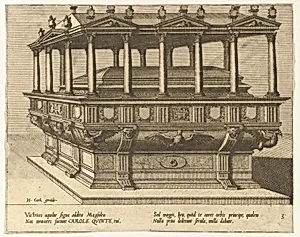
Medium
Etching; first state of four
Dimensions
sheet: 6 9/16 x 8 1/4 in. (16.7 x 20.9 cm)
Classification
Prints|Ornament & Architecture
Department
Drawings and Prints
Museum
Metropolitan Museum of Art, New York, NY
Credit
Purchase, Phyllis D. Massar Gift, 2011
Accession Number
2011.510.3
Rights
Public Domain
Tags
Art Historical Context
In the bustling print workshops of 16th-century Antwerp, *Cœnotaphiorum (3)* (1563) emerged as plate three in a series of fantasticalotaph designs by architect and artist Hans Vredeman de. Etched by the skilled brothers Johannes and Lucas vanetecum and published the renowned Hieronymus Cock, first-state impression captures an elaborate empty tomb adorned with birds, coats of arms, and intricate architectural motifs. Measuring just 6 9/16 x 8 1/4 inches, it exemplifies the Northern Mannerist style, blending perspective illusionism with ornamental exuberance. Vredeman de Vries, a master of architectural fantasy, drew inspiration from classical antiquity and contemporary engineering, creating imaginary monuments that blurred reality and invention. The Doetecum brothers' etching technique—using acid to bite fine, expressive lines into metal plates—allowed for unprecedented detail in foliage, feathers, and heraldic symbols, making these prints highly collectible models for sculptors, goldsmiths, and builders across Europe. This work highlights Antwerp's golden age of printmaking, where collaborative efforts democratized sophisticated designs. As a rare first state, it preserves the purest form before later alterations, offering visitors a window into Renaissance ingenuity and the cultural prestige of monumental commemoration.