
Cover
19th century
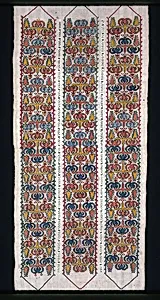
Medium
Cotton, plain weave; pulled thread work embroidered with silk in darning and hem stitches; embroidered in double running, four-sided, overcast and satin stitches
Dimensions
95.6 × 43.6 cm (37 5/8 × 17 1/4 in.)
Classification
textile
Department
Textiles
Museum
Art Institute of Chicago
Accession Number
27264
Rights
Public Domain
Art Historical Context
This exquisite 19th-century textile cover, measuring 95.6 × 43.6 cm, showcases the artistry of anonymous makers through intricate embroidery on a plain-weave cotton ground. Likely used as a decorative bed cover, pillow sham, or tablecloth in a domestic setting, it exemplifies the fine needlework traditions of the era, where such pieces were crafted for both utility and beauty. The cover's technical mastery lies in its diverse embroidery techniques: pulled thread work, where threads are manipulated to form delicate openwork patterns, combined with silk threads in darning and hem stitches for textured effects. Additional methods—double running (a staple of blackwork embroidery), four-sided, overcast, and satin stitches—create rhythmic motifs and bold highlights, demonstrating the embroiderer's skill in counted-thread precision and surface embellishment. These methods, rooted in European folk traditions, highlight embroidery's role as an accessible yet sophisticated art form. Housed in the Art Institute of Chicago's Textiles Department, this cover preserves the cultural legacy of 19th-century women's handiwork, often passed down through families. It invites us to appreciate the patience and creativity behind everyday objects, transforming simple cotton into a testament to enduring craftsmanship.
About the Artist
Unknown
The artist designated as "Unknown" in our virtual museum's collection exemplifies a poignant chapter in art history: creators whose identities have faded into obscurity despite the enduring power of their work. With only one known artwork attributed to them in our holdings, this figure represents countless anonymous hands that shaped visual culture across centuries. Museums worldwide, including th...