
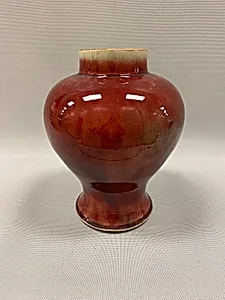
Covered jar
Unknown Artist
late 17th–early 18th century
Medium
Porcelain with copper red glaze (Jingdezhen ware)
Dimensions
H. incl. lid 16 1/2 in. (41.9 cm); Diam. 10 in. (15.4 cm)
Classification
Ceramics
Culture & Period
China · Qing dynasty (1644–1911), Kangxi period (1662–1722)
Department
Asian Art
Museum
Metropolitan Museum of Art, New York, NY
Credit
Bequest of Benjamin Altman, 1913
Accession Number
14.40.103a, b
Rights
Public Domain
Art Historical Context
This elegant covered jar, crafted in Jingdezhen porcelain with a striking copper red glaze, hails from China's Qing dynasty during the Kangxi (1662–1722). Standing 16½ inches tall with a 10-inch diameter, it the pinnacle of imperial ceramic production at Jingdezhen, the world's center for porcelain since the Song dynasty. The deep, oxblood-red hue—known as *sang de boeuf*—was achieved through a complex firing process involving copper oxide, often under oxygen-reduced conditions in wood-fired kilns, resulting in a glossy, gem-like finish prized by emperors and collectors alike. During the Kangxi reign, porcelain like this jar symbolized technological mastery and aesthetic refinement, often produced for the imperial court or export to Europe, where it inspired the Delft and Meissen factories. Though its exact use is unknown—possibly for storing spices, oils, or as a decorative vessel—its robust form and harmonious lid design reflect the period's emphasis on balance and functionality. Bequeathed to the Metropolitan Museum of Art by Benjamin Altman in 1913, this piece invites us to appreciate the enduring allure of Chinese ceramics, bridging artistry and everyday imperial life.