
Cup
Unknown Artist
Medium
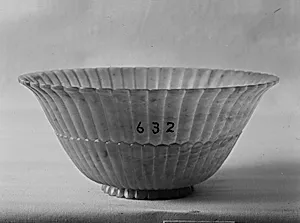
Nephrite, white with faint greenish gray tint
Dimensions
H. 3 3/8 in. (8.5 cm); W. 5 in. (12.7 cm)
Classification
Jade
Culture & Period
China · Qing dynasty (1644–1911), Qianlong period (1736–95)
Department
Asian Art
Museum
Metropolitan Museum of Art, New York, NY
Credit
Gift of Heber R. Bishop, 1902
Accession Number
02.18.632
Rights
Public Domain
Art Historical Context
This elegant jade cup, crafted during the Qianlong period (1736–95) of China's Qing dynasty, exemplifies the imperial era's mastery of luxury craftsmanship. Measuring just 3⅜ inches high and 5 inches, its petite form suggests it was designed for ceremonial use, perhaps as a libation vessel in rituals or scholarly gatherings. The Qianlong emperor, a fervent patron of the arts, oversaw workshops that elevated jade carving to new heights, producing objects that blended utility with profound symbolism. Carved from nephrite—a prized form of jade with a white body and faint greenish-gray tint—the cup showcases the stone's natural translucency and toughness. Nephrite held immense cultural significance in China, symbolizing purity, immortality, and moral virtue since Neolithic times. Artisans employed meticulous techniques, likely polishing the surface to a luminous sheen and subtly following the stone's veining to enhance its organic beauty, without added decoration to let the material shine. A gift to the Metropolitan Museum of Art from Heber R. Bishop in 1902, this anonymous masterpiece invites visitors to ponder the refined tastes of Qing elites. Gaze closely, and you'll sense the cool, silky touch of jade that once graced an emperor's court.