
Cup-Hilted Rapier
About 1650
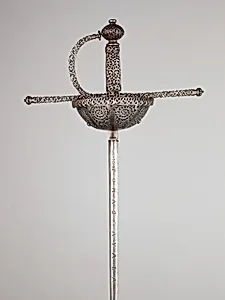
Medium
Steel and iron
Dimensions
Overall: H.: 117 cm (46 1/16 in.); Blade: H.: 100.6 cm (39 5/8 in.)
Classification
edged weapon-sword
Department
Applied Arts of Europe
Museum
Art Institute of Chicago
Accession Number
106253
Rights
Public Domain
Art Historical Context
Step into the elegant world of 17th European arms at the Art Institute of Chicago where this Cup-Hilted Rapier about 1650 stands as masterful example of functional beauty. Crafted from steel and iron, the measures an impressive overall height of 117 cm (46 1/16 in.), with a blade stretching 100.6 cm (39 5/8 in.). Its distinctive cup-shaped hilt— a hallmark of the period—offers robust hand protection while evoking the opulence of Baroque design. Originating in the Applied Arts of Europe department and classified as an edged weapon-sword, this rapier embodies the era's fascination with refined combat. By the mid-1600s, rapiers had evolved from Renaissance broadswords into slender, thrusting weapons favored by nobility for duels, self-defense, and courtly display. The cup hilt, likely of Spanish or Iberian influence, combined practicality with aesthetic flair, shielding the wielder's hand during swift parries and lunges. What makes this piece truly captivating is its testament to skilled metalworking: the steel blade, forged for deadly precision and balance, pairs with an iron guard showcasing the blacksmith's artistry. As a symbol of chivalric status amid Europe's turbulent age of absolutism, it reminds us how weapons doubled as wearable sculptures, blending lethal utility with cultural prestige.
About the Artist
Unknown
The artist designated as "Unknown" in our virtual museum's collection exemplifies a poignant chapter in art history: creators whose identities have faded into obscurity despite the enduring power of their work. With only one known artwork attributed to them in our holdings, this figure represents countless anonymous hands that shaped visual culture across centuries. Museums worldwide, including th...