
Curtain
1889/90
Medium
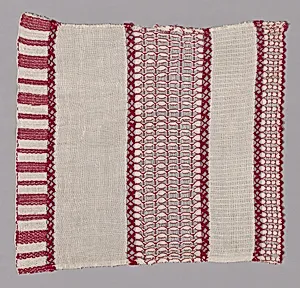
Linen and cotton, strips of: plain weave; plain weave with bands of weft floats; plain weave and alternating weft-float weave; plain weave, open work with crossed wefts; and plain weave, open work with knotted weft wrapping; joined with cotton, crochet and crocheted borders
Dimensions
86.5 × 89 cm (34 × 35 in.)
Classification
textile
Department
Textiles
Museum
Art Institute of Chicago
Accession Number
80405
Rights
Public Domain
Art Historical Context
Step into the intimate world of late 19th-century domestic artistry with *Curtain* (1889/90) by Elise Grill, a masterful textile now housed in the Art Institute Chicago's Textiles Department. Measuring 86.5 × 89 cm (34 × 35 in.), this functional yet exquisite piece was crafted from linen and cotton strips, transforming everyday materials into a delicate screen or room divider. Its modest scale suggests it graced a home interior, blending utility with ornamental charm during an era when handmade textiles offered a personal touch amid growing industrialization. Grill's ingenuity shines in the diverse weaving techniques: plain weave for sturdy foundations, bands of weft floats for subtle texture, alternating weft-float weaves for pattern play, open work with crossed wefts for airy transparency, and open work accented by knotted weft wrapping for tactile depth. These strips were meticulously joined using cotton crochet and bordered with crocheted edges, showcasing advanced needlework skills likely honed in a domestic setting. Such labor-intensive methods highlight the artistic value of textiles, often overlooked but vital to Victorian-era crafts. As a classified textile, *Curtain* exemplifies the cultural significance of women's handiwork in the 1880s–90s, preserving techniques that bridged folk traditions and emerging design movements. Visitors can appreciate how Grill elevated the everyday into enduring beauty, inviting reflection on the artistry hidden in our surroundings.