
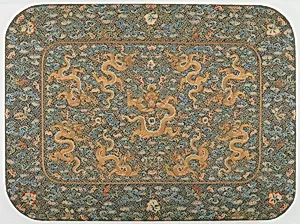
Cushion cover
18th century
Classification
Costume and Textile
Department
Smithsonian Collection
Museum
Smithsonian American Art Museum
Credit
Gift of Charles Lang Freer
Accession Number
F1915.296
Rights
Public Domain
Tags
About this artwork
Thronelike chairs were appointed with elaborate cushions to make them more comfortable and to signal the sitter's status. The design here, consisting of nine five-clawed dragons, was one that only the emperor and his closest associates could use. Other motifs on the cushion symbolize good fortune and longevity. The Chinese name for the narcissus plant, for example, contains the word "immortal," and peaches are also emblems of immortality. Bats, a symbol of good fortune, fly among the brightly co...
About the Artist
Unknown
The artist designated as "Unknown" in our virtual museum's collection exemplifies a poignant chapter in art history: creators whose identities have faded into obscurity despite the enduring power of their work. With only one known artwork attributed to them in our holdings, this figure represents countless anonymous hands that shaped visual culture across centuries. Museums worldwide, including th...